
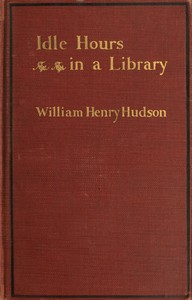
Idle Hours in a Library
Written by William Henry Hudson
Chaptra reads alongside you — AI insights, chapter breakdowns and reader discussions for every book. Join free
About this book
Read it with a club
Small groups reading the same books and talking as they go.


News
- 4 members
- 1,813 discussions
- Active Sep 11
Read Idle Hours in a Library alongside people who are reading it too.
Also here: News Bulletin, Just Joking....
Chaptra Prime — paid clubs, every club feature, and unlimited reading support, for $5 a month or $60 once.
See PrimeReading guide
Themes, characters and key ideas in Idle Hours in a Library, written by Chaptra AI.
- about 8 hours
- intermediate
- contemplative
- erudite
- reflective
Idle Hours in a Library by William Henry Hudson is a late 19th-century collection of contemplative essays, born from the author's personal reflections during his time spent browsing various texts. The volume interweaves Hudson's individual insights with rich historical context, particularly focusing on Elizabethan life and classic literary figures like Shakespeare and Samuel Pepys. Presented in an informal and accessible style, these essays, originally lectures and magazine articles, aim to re-engage readers with historical literature. Hudson's overarching intent is to highlight the enduring vitality of classic writers and foster a deeper appreciation for the profound joys of reading amidst the everyday.
“In the quiet sanctuary of the library, where the dust of ages settles lightly upon forgotten tomes, one finds not merely pages but echoes of lives, thoughts, and passions that transcend time.”
Key themes
- The Enduring Power of Classic Literature
- Hudson consistently argues for the timeless relevance and vitality of classical texts. He demonstrates how works from past eras, particularly the Elizabethan period, continue to offer profound insights into the human condition, societal structures, and individual experiences, transcending their historical origins.
- The Intersection of Literature and Life
- Hudson explores how literature is not separate from life but deeply intertwined with it. He shows how texts reflect the social and moral fabric of their times, and conversely, how reading enriches and informs the reader's own life, providing context, empathy, and a deeper understanding of human experience.
- The Joy and Value of Contemplative Reading
- A core theme is the advocacy for a slow, reflective, and personal engagement with books, contrasting with superficial or utilitarian reading. Hudson emphasizes that the 'idle hours' spent in a library are not wasted but are profoundly enriching, offering intellectual pleasure, spiritual solace, and a deeper connection to the human intellectual tradition.
Worth discussing
How does Hudson's concept of 'idle hours' in a library contrast with modern views of productivity and leisure?
Chapter-by-chapter breakdowns, character arcs and the full thematic analysis come with a free account.
Discussions
No one has started one yet
Questions this book opens up
No discussions yet
Be the first to start a discussion about this book!
Sign up to start the discussionReviews
No reviews yet
Be the first to review this book!