
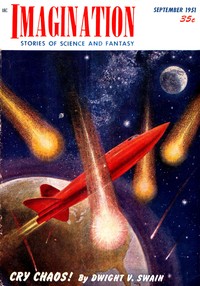
I'll See You in My Dreams
Written by William Campbell Gault
Chaptra reads alongside you — AI insights, chapter breakdowns and reader discussions for every book. Join free
About this book
Reading guide
Themes, characters and key ideas in I'll See You in My Dreams, written by Chaptra AI.
- about 8 hours
- intermediate
- psychological
- fantastical
- introspective
William Campbell Gault's "I'll See You in My Dreams" is a unique blend of early 1950s science fiction and psychological drama, chronicling Ted Truesdale's internal struggle with marital complacency and burgeoning desires. Preoccupied by dreams of a beautiful neighbor, Ted's reality is further complicated by Hamilton, a talking squirrel who claims to be a deity aiming to revive the god of Lust. This fantastical catalyst propels Ted into a journey of self-discovery, forcing him to confront the complexities of fidelity, fantasy, and the true nature of his love for his wife, Ann. The novel ultimately explores the delicate balance between inner desires and external commitments, leading to a poignant re-evaluation of his relationship.
“Not available without full text of the book, as this is an automatically generated analysis based on a summary.”
Key themes
- Desire vs. Fidelity
- This theme explores the inherent human conflict between the longing for new experiences, excitement, and sexual desire (lust) versus the commitments and responsibilities of a faithful relationship. Ted's dreams and Hamilton's influence directly challenge his marital fidelity, forcing him to confront the strength and nature of his vows against his inner yearnings.
- Fantasy vs. Reality
- The novel blurs the lines between Ted's vivid dream life and his waking reality. His dreams of the blonde neighbor and the fantastical presence of Hamilton begin to exert a tangible influence on his decisions and emotional state, prompting him to question what is truly real and what constitutes his authentic self and desires.
- The Nature of Love and Marriage
- Gault explores the complexities of long-term relationships, moving beyond a simplistic view of marriage as merely a societal obligation. Through Ted's journey, the novel suggests that love requires continuous effort, self-awareness, and a willingness to confront uncomfortable truths, ultimately aiming for a deeper, more honest connection between partners.
Worth discussing
How does the novel use the fantastical element of Hamilton, the talking squirrel, to explore Ted's psychological state and desires?
Chapter-by-chapter breakdowns, character arcs and the full thematic analysis come with a free account.
Discussions
No one has started one yet
Questions this book opens up
No discussions yet
Be the first to start a discussion about this book!
Sign up to start the discussionReviews
No reviews yet
Be the first to review this book!