
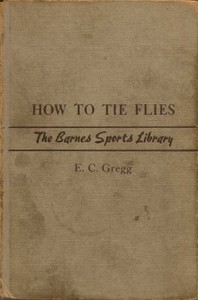
How to Tie Flies
Written by Ellery Clark Gregg
Chaptra reads alongside you — AI insights, chapter breakdowns and reader discussions for every book. Join free
About this book
Reading guide
Themes, characters and key ideas in How to Tie Flies, written by Chaptra AI.
- about 10 hours
- intermediate
- Instructive
- Practical
- Encouraging
Ellery Clark Gregg's "How to Tie Flies" is an essential early 20th-century instructional manual dedicated to the intricate art of fly tying. The book meticulously guides both novice and seasoned anglers through the techniques required to craft high-quality fishing flies, emphasizing artistic precision over industrial shortcuts. It systematically progresses from fundamental concepts and simpler patterns to more complex designs, fostering skill development and encouraging creativity in lure creation. Gregg's work highlights the growing angler interest in self-made flies, providing a comprehensive resource for sourcing materials and tools. Ultimately, it serves as a foundational text for developing practical skills and an appreciation for the craftsmanship inherent in fly tying.
“"The purpose of this manual... is to teach the crafting of flies with an artistic focus, rather than shortcuts used in mass production."”
Key themes
- Craftsmanship and Artistry
- This is the core theme, emphasizing the meticulous skill and aesthetic beauty involved in fly tying, positioning it as an art form rather than mere utility. Gregg champions the quality and care of handmade items over the shortcuts of mass production, suggesting a deeper value in the creator's personal touch and dedication.
- Patience and Skill Development
- The book systematically guides the reader from simple to complex, inherently promoting the virtue of patience and the satisfaction derived from gradual skill acquisition. It acknowledges that mastery is a process, not an instant achievement, and encourages perseverance through challenging techniques.
- Self-Reliance and Creativity
- Gregg encourages anglers to become self-sufficient in creating their own lures, thereby fostering independence from commercial producers. Beyond mere replication, the book promotes imaginative development of new patterns, suggesting that true mastery involves personal innovation and adaptation to various fishing scenarios.
Worth discussing
How does Gregg's emphasis on 'artistic focus' differentiate fly tying from other practical hobbies or crafts?
Chapter-by-chapter breakdowns, character arcs and the full thematic analysis come with a free account.
Discussions
No one has started one yet
Questions this book opens up
No discussions yet
Be the first to start a discussion about this book!
Sign up to start the discussionReviews
No reviews yet
Be the first to review this book!