
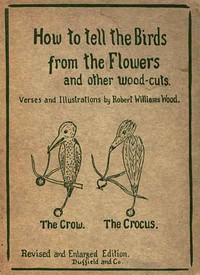
How to tell the Birds from the Flowers, and other Wood-cuts: A Revised Manual of Flornithology for Beginners
Written by Robert Williams Wood
Chaptra reads alongside you — AI insights, chapter breakdowns and reader discussions for every book. Join free
About this book
Reading guide
Themes, characters and key ideas in How to tell the Birds from the Flowers, and other Wood-cuts: A Revised Manual of Flornithology for Beginners, written by Chaptra AI.
- about 8 hours
- beginner
- humorous
- whimsical
- educational
Robert Williams Wood's "How to tell the Birds from the Flowers, and other Wood-cuts" is a delightful early 20th-century manual of 'flornithology' that ingeniously blends humor with natural science. Through a series of witty verses and accompanying illustrations, the book playfully instructs beginners on distinguishing various birds from botanical elements, often highlighting common visual resemblances or phonetic similarities. This unique approach transforms potentially dry educational content into an accessible and entertaining experience, inviting readers to appreciate the eccentricities of the natural world. It stands as a charming testament to the power of whimsy in pedagogy, appealing to both children and adults with its clever observations and lighthearted tone.
“The Crow, you'll note, is dark and grand, / While Crocus blooms across the land. / One flies with caw, one stands so still; / Confuse them not, if you have will!”
Key themes
- Humor as a Pedagogical Tool
- Wood masterfully demonstrates that learning does not have to be a dry, serious endeavor. By infusing natural science with whimsy, wit, and verse, he makes potentially complex or dull distinctions engaging and memorable. The humor serves as a mnemonic device, ensuring that the lessons stick with the reader long after the laughter subsides. It creates a positive and enjoyable learning environment, making the subject matter accessible to a broad audience, particularly beginners.
- The Blurring of Categories and Misconception
- The central premise of 'flornithology' directly addresses how easily visual or phonetic similarities can lead to confusion, challenging the strict boundaries of scientific classification. The book playfully highlights how human perception can be misled, making a humorous point about the subjective nature of observation and the need for careful distinction. It implicitly questions rigid categorization by showing how arbitrary lines can sometimes be.
- Appreciation of Nature's Quirks and Intricacies
- Beyond the humor, the book fosters a deeper appreciation for the subtle and often surprising details found in the natural world. By drawing attention to specific features of birds and flowers—whether visual, auditory, or phonetic—Wood encourages readers to observe their environment more closely. It highlights the inherent oddities and unique characteristics of living things, celebrating nature's diversity and its capacity for wonder, even in its most mundane elements.
Worth discussing
How does humor serve as an effective pedagogical tool in this book?
Chapter-by-chapter breakdowns, character arcs and the full thematic analysis come with a free account.
Discussions
No one has started one yet
Questions this book opens up
No discussions yet
Be the first to start a discussion about this book!
Sign up to start the discussionReviews
No reviews yet
Be the first to review this book!