
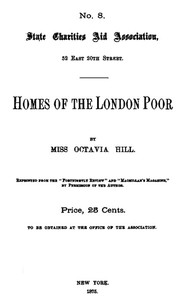
Homes of the London Poor
Written by Octavia Hill
Chaptra reads alongside you — AI insights, chapter breakdowns and reader discussions for every book. Join free
About this book
Read it with a club
Small groups reading the same books and talking as they go.


News
- 4 members
- 1,813 discussions
- Active Sep 11
Read Homes of the London Poor alongside people who are reading it too.
Also here: News Bulletin, Just Joking....
Chaptra Prime — paid clubs, every club feature, and unlimited reading support, for $5 a month or $60 once.
See PrimeReading guide
Themes, characters and key ideas in Homes of the London Poor, written by Chaptra AI.
- about 8 hours
- intermediate
- serious
- informative
- earnest
Octavia Hill's "Homes of the London Poor" is a seminal late 19th-century account detailing her pioneering efforts in housing reform for London's impoverished. The book chronicles her practical approach to property management, emphasizing not just the physical improvement of dwellings but also the moral and social upliftment of tenants through personal engagement and fostering self-reliance. Hill's narrative highlights the dire conditions faced by the poor under unscrupulous landlords and articulates her philosophy that combines strict, fair management with genuine care and respect for individual dignity. It serves as a foundational text for modern social housing and philanthropy, demonstrating how structured yet sympathetic intervention can empower marginalized communities.
“"We are trying to develop the best powers of the people themselves, not to let them lean on us, but to stand alone."”
Key themes
- Social Reform and Practical Philanthropy
- This theme explores Hill's innovative approach to addressing urban poverty, moving beyond traditional charity to a system of active, personal engagement and responsible management. It emphasizes the belief that effective reform requires practical solutions and direct involvement.
- Dignity and Self-Reliance
- A core tenet of Hill's philosophy, this theme asserts that true upliftment of the poor comes not from handouts but from fostering their inherent capabilities, self-respect, and responsibility. It critiques systems that inadvertently strip individuals of their agency.
- Housing and Urban Poverty
- The book meticulously details the appalling living conditions of the urban poor in late 19th-century London, highlighting the direct link between inadequate housing, poor health, and social degradation. It positions housing as a fundamental human right and a critical component of social well-being.
Worth discussing
To what extent do Hill's methods for improving the 'character' of the poor align with or diverge from modern approaches to social work and housing assistance?
Chapter-by-chapter breakdowns, character arcs and the full thematic analysis come with a free account.
Discussions
No one has started one yet
Questions this book opens up
No discussions yet
Be the first to start a discussion about this book!
Sign up to start the discussionReviews
No reviews yet
Be the first to review this book!