
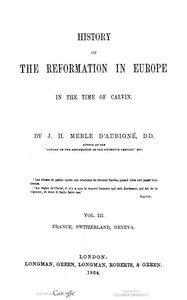
History of the Reformation in Europe in the Time of Calvin. Vol. 3 (of 8)
Written by J. H. (Jean Henri) Merle d'Aubigné
Chaptra reads alongside you — AI insights, chapter breakdowns and reader discussions for every book. Join free
About this book
Reading guide
Themes, characters and key ideas in History of the Reformation in Europe in the Time of Calvin. Vol. 3 (of 8), written by Chaptra AI.
- about 8 hours
- advanced
- Historical
- Serious
- Inspiring
Volume 3 of J. H. Merle d'Aubigné's extensive 'History of the Reformation in Europe in the Time of Calvin' provides a detailed historical account of the early stages of the Reformation, particularly focusing on John Calvin's emergence as a pivotal figure. Written from a distinctly Protestant perspective in the mid-19th century, this volume chronicles Calvin's flight from persecution in Paris, his period of intellectual seclusion in Angoulême, and the development of his foundational theological works. It explores the intense struggles for spiritual liberty and the societal transformations occurring in France, Switzerland, and Geneva as Calvin's teachings began to take root, connecting him with fellow reformers and educated individuals who championed the Reformed faith amidst significant challenges and conflicts.
“The truth, once kindled, finds its path even through the darkest dungeons and the most formidable gates of power.”
Key themes
- Spiritual Liberty and Conscience
- This theme is central to the entire Reformation narrative, and particularly prominent in d'Aubigné's work. It explores the reformers' quest for freedom from what they perceived as ecclesiastical tyranny and their insistence on individual conscience guided by Scripture. The book details the struggles to establish a faith based on direct access to God's word, unfettered by human traditions or intermediaries, and the profound societal implications of this demand.
- Persecution and Perseverance
- The narrative vividly portrays the intense persecution faced by early reformers, including Calvin himself. This theme highlights the immense personal cost of challenging established religious and political powers. It explores how individuals and communities demonstrated extraordinary perseverance, faith, and courage in the face of imprisonment, torture, and death, often strengthening their resolve rather than breaking it. D'Aubigné uses these accounts to emphasize the moral fortitude of the reformers.
- The Power of Ideas and Intellectual Pursuit
- This theme underscores the transformative power of intellectual engagement, particularly the rigorous study of theology and Scripture. Calvin's period of seclusion in Angoulême is presented as a crucible for his intellectual development, where his ideas were forged and refined. The book demonstrates how abstract theological concepts, once articulated, could ignite social movements, challenge political structures, and reshape entire societies, emphasizing that the Reformation was as much an intellectual revolution as a spiritual one.
Worth discussing
How does d'Aubigné's 19th-century Protestant perspective influence his portrayal of John Calvin and the Reformation events?
Chapter-by-chapter breakdowns, character arcs and the full thematic analysis come with a free account.
Discussions
No one has started one yet
Questions this book opens up
No discussions yet
Be the first to start a discussion about this book!
Sign up to start the discussionReviews
No reviews yet
Be the first to review this book!