
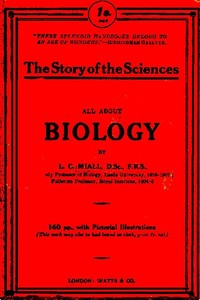
History of biology
Written by L. C. (Louis Compton) Miall
Chaptra reads alongside you — AI insights, chapter breakdowns and reader discussions for every book. Join free
About this book
Reading guide
Themes, characters and key ideas in History of biology, written by Chaptra AI.
- about 12 hours
- advanced
- Informative
- Scholarly
- Historical
L. C. Miall's "History of Biology" offers an illuminating journey through the development of biological sciences from antiquity to the early 20th century. Beginning with a vivid portrayal of biology's rudimentary state around 1500, characterized by fables and inaccuracies, the book meticulously traces its evolution into a sophisticated scientific discipline. Miall highlights the pivotal role of Greek thinkers, particularly Aristotle, in establishing early scientific methods and systematic observation, laying foundational groundwork for comparative anatomy. The text then navigates through various periods of scientific advancement, showcasing how cumulative discoveries and the contributions of numerous individuals transformed the understanding of life, culminating in the rich and diversified field known in Miall's contemporary era.
“"Biology, around the year 1500, was a rudimentary natural history, steeped in inaccuracies and ancient fables, a testament to the primitive state of scientific inquiry."”
Key themes
- The Evolution of Scientific Methodology
- This theme explores how the methods of biological inquiry transformed from rudimentary observations steeped in fables to systematic, empirical, and experimental approaches. Miall emphasizes the critical shift from accepting ancient authorities to demanding verifiable evidence, showcasing the development of classification, comparative anatomy, and the scientific method itself.
- The Triumph of Empiricism over Superstition
- A core theme is the gradual displacement of ancient myths, fables, and unverified beliefs by evidence-based observation and rational inquiry. Miall illustrates how biological understanding progressed by challenging established inaccuracies and demanding empirical proof, demonstrating humanity's capacity to overcome intellectual biases.
- The Cumulative Nature of Scientific Knowledge
- The book consistently demonstrates that scientific progress is rarely the work of a single genius but rather an ongoing process where each discovery builds upon previous insights. Miall shows how knowledge accumulates over centuries, with each generation correcting, refining, and expanding the understanding inherited from its predecessors.
Worth discussing
How does Miall's portrayal of biology around 1500 influence our understanding of scientific progress?
Chapter-by-chapter breakdowns, character arcs and the full thematic analysis come with a free account.
Discussions
No one has started one yet
Questions this book opens up
No discussions yet
Be the first to start a discussion about this book!
Sign up to start the discussionReviews
No reviews yet
Be the first to review this book!