
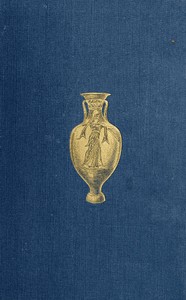
History of Ancient Pottery: Greek, Etruscan, and Roman. Volume 1 (of 2)
Written by H. B. (Henry Beauchamp) Walters,Samuel Birch
Chaptra reads alongside you — AI insights, chapter breakdowns and reader discussions for every book. Join free
About this book
Reading guide
Themes, characters and key ideas in History of Ancient Pottery: Greek, Etruscan, and Roman. Volume 1 (of 2), written by Chaptra AI.
- about 25 hours
- advanced
- Informative
- Scholarly
- Analytical
H.B. Walters' "History of Ancient Pottery: Greek, Etruscan, and Roman. Volume 1" is a foundational scholarly work from the early 20th century, offering a comprehensive exploration of ceramic traditions across these ancient civilizations. The volume establishes pottery not merely as collected artifacts but as critical archaeological resources reflecting social, historical, and artistic contexts. It delves into the evolution of pottery techniques, the significance of excavation, and the cultural symbolism embedded within these objects. This initial volume sets the methodological stage for a detailed examination of various forms, uses, and aesthetic dimensions of ancient pottery, serving as an indispensable guide for classical archaeologists and students of antiquity.
“Pottery is not merely a collection of materials, but a profound testament to the social, historical, and artistic contexts of ancient civilizations.”
Key themes
- Pottery as a Historical and Archaeological Record
- This theme explores how pottery, through its forms, decorative motifs, manufacturing techniques, and archaeological context, serves as an invaluable primary source for reconstructing ancient societies. It details how ceramics provide insights into daily life, economic systems, religious practices, social hierarchies, and chronological dating, making them indispensable for historical understanding.
- Technological and Artistic Evolution of Ceramics
- This theme traces the progressive development of ceramic production, from basic hand-building techniques to sophisticated wheel-throwing, firing, glazing, and painting methods across Greek, Etruscan, and Roman cultures. It highlights the innovation in material science, engineering, and artistic expression, showcasing how potters adapted and refined their craft over centuries.
- Cultural Exchange and Identity through Pottery
- This theme explores how pottery serves as a tangible medium for understanding the complex interactions, influences, and distinct identities of the Greek, Etruscan, and Roman civilizations. It examines how stylistic elements, forms, and techniques were borrowed, adapted, and uniquely developed, reflecting periods of cultural exchange, emulation, and assertion of local identity.
Worth discussing
How has the methodology for studying ancient ceramics evolved since H.B. Walters' time, and what new insights have emerged?
Chapter-by-chapter breakdowns, character arcs and the full thematic analysis come with a free account.
Discussions
No one has started one yet
Questions this book opens up
No discussions yet
Be the first to start a discussion about this book!
Sign up to start the discussionReviews
No reviews yet
Be the first to review this book!