
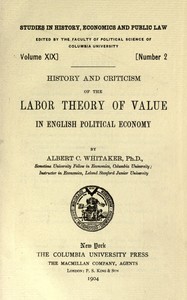
History and criticism of the labor theory of value in English political economy
Written by Albert C. (Albert Conser) Whitaker
Chaptra reads alongside you — AI insights, chapter breakdowns and reader discussions for every book. Join free
About this book
This work by Whitaker, Albert C. (Albert Conser) offers readers a unique literary experience. The narrative explores themes of economics and labor theory of value.
Reading guide
Themes, characters and key ideas in History and criticism of the labor theory of value in English political economy, written by Chaptra AI.
- about 25 hours
- advanced
- analytical
- scholarly
- historical
Albert C. Whitaker's "History and criticism of the labor theory of value in English political economy" meticulously traces the intellectual lineage and analytical development of the labor theory of value (LTV) within British economic thought. Beginning with its philosophical antecedents and early proponents like Locke and Smith, Whitaker rigorously examines its refinement by classical economists such as Ricardo, its radical transformation by Marx, and the subsequent critiques that led to its decline in mainstream economics. The work serves as a foundational scholarly text, offering a comprehensive historical survey and a critical assessment of the theory's conceptual strengths, weaknesses, and enduring influence on economic discourse. It highlights the shifting intellectual landscape that shaped economic theory from the 17th to the early 20th century.
“The labor theory of value, in its various forms, has been a central pillar of economic thought for centuries, offering profound insights into the nature of production and distribution.”
Key themes
- The Nature of Value
- This is the overarching theme, exploring how different economists from Locke to Marx and beyond conceptualized what constitutes 'value' in an economic sense. Whitaker examines the shift from labor-based theories to utility-based theories, and the implications of these different understandings for economic analysis and policy.
- Labor as the Source of Value
- A specific, central aspect of the 'Nature of Value' theme, this focuses on the historical argument that labor, in some form, is the fundamental source or measure of economic value. Whitaker traces the evolution of this idea, from its initial formulation to its most complex and controversial applications, and its eventual challenges.
- Evolution of Economic Thought
- This theme highlights the dynamic and progressive nature of economic science, showing how theories are developed, refined, challenged, and sometimes superseded. Whitaker's work itself is a testament to this evolution, documenting the intellectual lineage and paradigm shifts within economics.
Worth discussing
How did the philosophical ideas of John Locke influence the early conceptualization of the labor theory of value, and what were the key differences between his view and later economists?
Chapter-by-chapter breakdowns, character arcs and the full thematic analysis come with a free account.
Discussions
No one has started one yet
Questions this book opens up
No discussions yet
Be the first to start a discussion about this book!
Sign up to start the discussionReviews
No reviews yet
Be the first to review this book!