
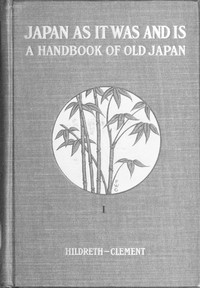
Hildreth's "Japan as It Was and Is": A Handbook of Old Japan, Volume 2 (of 2)
Written by Richard Hildreth
Chaptra reads alongside you — AI insights, chapter breakdowns and reader discussions for every book. Join free
About this book
Reading guide
Themes, characters and key ideas in Hildreth's "Japan as It Was and Is": A Handbook of Old Japan, Volume 2 (of 2), written by Chaptra AI.
- about 15 hours
- advanced
- informative
- historical
- detailed
Hildreth's "Japan as It Was and Is," Volume 2, serves as a meticulous historical handbook offering a detailed glimpse into the daily life, infrastructure, and cultural nuances of old Japan. Published in the early 20th century, this volume specifically focuses on the practicalities of travel, meticulously describing the sophisticated network of post-houses and inns that facilitated movement across the country. It delves into the social customs of hospitality, the diverse roles of individuals from common travelers to Imperial messengers, and the distinctive architectural designs of traditional Japanese accommodations. The work ultimately stands as an invaluable primary source for understanding the societal structures and material culture of Japan prior to significant modernization.
“The post-houses and inns, forming a vital chain, facilitated not merely movement, but the very pulse of communication and governance across the Japanese archipelago.”
Key themes
- Social Hierarchy and Order
- The book meticulously details how social standing dictated every aspect of life, particularly travel and accommodation. From the types of services offered at inns to the specific arrangements for different classes of travelers, the rigid social stratification of old Japan is constantly underscored. Imperial messengers, for instance, received distinct treatment, highlighting the importance of rank.
- Cultural Preservation and Material Culture
- Hildreth's work serves as an invaluable record of Japanese material culture and customs that were likely undergoing rapid change during the early 20th century. By detailing the specifics of traditional inns, homes, and the practices surrounding travel, the book preserves a snapshot of a particular historical period, emphasizing the unique aspects of Japanese design, hospitality, and daily life.
- Logistical Ingenuity and Infrastructure
- The book showcases the highly organized and efficient transportation system of historical Japan, particularly the network of post-houses and inns. It details how this infrastructure facilitated travel, communication, and governance across the country, demonstrating the sophisticated planning and management capabilities of the era without modern technology.
Worth discussing
How does Hildreth's description of post-houses and inns reveal the social hierarchy and class distinctions in historical Japan?
Chapter-by-chapter breakdowns, character arcs and the full thematic analysis come with a free account.
Discussions
No one has started one yet
Questions this book opens up
No discussions yet
Be the first to start a discussion about this book!
Sign up to start the discussionReviews
No reviews yet
Be the first to review this book!