
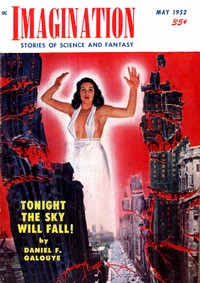
Hideout
Written by Fox B. Holden
Chaptra reads alongside you — AI insights, chapter breakdowns and reader discussions for every book. Join free
About this book
Reading guide
Themes, characters and key ideas in Hideout, written by Chaptra AI.
- about 8 hours
- intermediate
- adventurous
- perilous
- thought-provoking
Fox B. Holden's early 1950s science fiction novel, "Hideout," plunges readers into the perilous life of Robbin Cutlass, a notorious space pirate on the run after his ship's destruction by the Tri-Planet Entente Space Patrol. Seeking an impossible escape, Cutlass finds refuge and a new dimension of pursuit through the time-warping technology of the brilliant Martian scientist, Doc Raven. The narrative follows Robbin as he's propelled through various historical periods, forced to adapt and survive, continually confronting the recurring patterns of his life and the moral implications of his existence. Ultimately, the book delves into profound questions of identity, survival, and the inescapable consequences of one's choices across the fabric of space and time.
“"A pirate's heart beats true, no matter the century, no matter the star."”
Key themes
- Identity and Self-Discovery
- The core theme of the novel explores how identity is formed, whether it's fixed by one's past and lineage, or if it can be reshaped through experience and choice. Robbin's journey through different historical periods forces him to constantly re-evaluate who he is without the immediate context of his 'space pirate' persona, questioning if he is defined by his actions, his heritage, or his capacity for change.
- Survival and Adaptation
- This theme focuses on Robbin Cutlass's relentless struggle to survive against overwhelming odds, both from his pursuers and the challenges of vastly different historical environments. It explores not just physical survival but also the mental and emotional resilience required to adapt to new cultures, technologies, and dangers, highlighting the primal human drive to persist.
- Fate vs. Free Will / Consequences of Actions
- The novel delves into the philosophical debate of whether Robbin's life is predetermined by his notorious lineage and past actions, or if he possesses the free will to forge a new path. The 'recurring patterns' he observes in his temporal journey suggest a strong element of fate, yet his grappling with these consequences implies a struggle for agency and the possibility of choice in breaking the cycle.
Worth discussing
How does the concept of time-warping technology in "Hideout" challenge or reinforce traditional notions of destiny and free will?
Chapter-by-chapter breakdowns, character arcs and the full thematic analysis come with a free account.
Discussions
No one has started one yet
Questions this book opens up
No discussions yet
Be the first to start a discussion about this book!
Sign up to start the discussionReviews
No reviews yet
Be the first to review this book!