
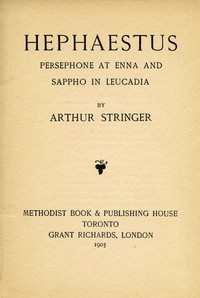
Hephaestus, Persephone at Enna, and Sappho in Leucadia
Written by Arthur Stringer
Chaptra reads alongside you — AI insights, chapter breakdowns and reader discussions for every book. Join free
About this book
Reading guide
Themes, characters and key ideas in Hephaestus, Persephone at Enna, and Sappho in Leucadia, written by Chaptra AI.
- about 8 hours
- advanced
- melancholy
- poignant
- reflective
Arthur Stringer's "Hephaestus, Persephone at Enna, and Sappho in Leucadia" is an early 20th-century collection of three poetic works, each reinterpreting a prominent figure from Greek mythology. The poems delve into the profound emotional landscapes of Hephaestus, Persephone, and Sappho, exploring universal themes of love, loss, sacrifice, and the bittersweet nature of existence. Stringer crafts narratives that highlight the psychological depths and struggles of these iconic characters, whether divine or mortal, as they confront unrequited love, the duality of joy and sorrow, or the agony of lost affection. Through lyrical introspection, the collection ultimately reflects on the beauty and fragility of human and divine emotions, intertwined with existential longing and tragic choices.
“"To yield a treasure held dear, though unreturned, is the truest forge of a god's heart."”
Key themes
- Grief & Melancholy
- Pervasive throughout the collection, this theme explores the profound sadness, sorrow, and pensive reflection on suffering. It's evident in Persephone's bittersweet existence and Sappho's overwhelming despair, highlighting the emotional toll of loss and the persistent shadow of sorrow.
- Unrequited Love & Sacrifice
- This theme is centrally explored through Hephaestus, who, despite his profound love for Aphrodite, selflessly relinquishes her to Ares. It examines the deep pain and nobility found in loving someone who does not return that affection, and the ultimate sacrifice of personal desire for the beloved's perceived happiness.
- Loss & Yearning
- Prominent in 'Sappho in Leucadia,' this theme explores the profound sense of emptiness and longing that follows the absence of a beloved. It delves into the consuming nature of yearning, which can lead to extreme emotional states and desperate actions when hope is lost.
Worth discussing
How does Stringer's portrayal of mythological figures differ from or align with traditional interpretations? What psychological depth does he add?
Chapter-by-chapter breakdowns, character arcs and the full thematic analysis come with a free account.
Discussions
No one has started one yet
Questions this book opens up
No discussions yet
Be the first to start a discussion about this book!
Sign up to start the discussionReviews
No reviews yet
Be the first to review this book!