
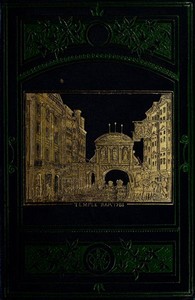
Haunted London
Written by Walter Thornbury
Chaptra reads alongside you — AI insights, chapter breakdowns and reader discussions for every book. Join free
About this book
Read it with a club
Small groups reading the same books and talking as they go.


News
- 4 members
- 1,813 discussions
- Active Sep 11
Read Haunted London alongside people who are reading it too.
Also here: News Bulletin, Just Joking....
Chaptra Prime — paid clubs, every club feature, and unlimited reading support, for $5 a month or $60 once.
See PrimeReading guide
Themes, characters and key ideas in Haunted London, written by Chaptra AI.
- about 15 hours
- advanced
- mysterious
- historical
- evocative
Walter Thornbury's "Haunted London" is a late 19th-century historical account that meticulously explores the multifaceted past of London, extending beyond mere ghost stories to encompass rich traditions, pivotal historical events, and significant figures tied to specific locales. The book functions as a guided journey through the city's evolving landscape, revealing its transformation over time and the social dynamics that have shaped its character. Thornbury, with deep affection, reflects on London's vastness and the intricate weaving of its history into its fabric, emphasizing the tension between progress and the preservation of historical memory. It aims to immerse readers in the grandeur and complexity of the city, as perceived by historical luminaries, and to uncover the fascinating anecdotes embedded within its ancient stones.
“"London! vast, shapeless, and unmanageable, yet with a spirit that binds its millions and echoes through every stone."”
Key themes
- The Intertwining of History and Legend
- Thornbury meticulously demonstrates how London's history is inseparable from its legends, particularly its ghost stories. These tales are not mere entertainment but serve as mnemonic devices, preserving memories of past events, figures, and social anxieties. He argues that understanding London requires acknowledging both its documented past and its rich tapestry of folklore, as they mutually inform and enrich each other.
- Transformation vs. Preservation
- A central tension in the book is the constant push-and-pull between London's relentless modernization and the desire to preserve its historical character and memory. Thornbury often highlights how progress, while necessary, frequently comes at the cost of erasing old landmarks, traditions, and the very physical manifestations of the city's past, leading to a sense of loss and nostalgia for what once was.
- The Spirit and Identity of London
- Thornbury explores what constitutes the 'spirit' or unique identity of London, arguing that it is more than just a collection of buildings and people. It is an entity forged from centuries of human activity, historical events, cultural traditions, and collective memory. The book delves into how this identity is perceived, maintained, and continuously redefined through its stories and its enduring presence.
Worth discussing
How does Thornbury use ghost stories to illuminate historical events and social dynamics, rather than merely to entertain?
Chapter-by-chapter breakdowns, character arcs and the full thematic analysis come with a free account.
Discussions
No one has started one yet
Questions this book opens up
No discussions yet
Be the first to start a discussion about this book!
Sign up to start the discussionReviews
No reviews yet
Be the first to review this book!