
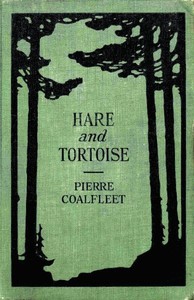
Hare and Tortoise
Written by Pierre Coalfleet
Chaptra reads alongside you — AI insights, chapter breakdowns and reader discussions for every book. Join free
About this book
Read it with a club
Small groups reading the same books and talking as they go.


News
- 4 members
- 1,813 discussions
- Active Sep 11
Read Hare and Tortoise alongside people who are reading it too.
Also here: News Bulletin, Just Joking....
Chaptra Prime — paid clubs, every club feature, and unlimited reading support, for $5 a month or $60 once.
See PrimeReading guide
Themes, characters and key ideas in Hare and Tortoise, written by Chaptra AI.
- about 8 hours
- intermediate
- introspective
- melancholy
- tense
Pierre Coalfleet's "Hare and Tortoise" is an early 20th-century fictional work that delves into the intricate marriage of Louise and Keble Eveley in rural Alberta. The narrative primarily explores Louise's internal struggles with identity, self-worth, and societal expectations, particularly in contrast to her husband's more refined background. As their life together unfolds, the story meticulously charts the subtle tensions and affections within their relationship, highlighting Louise's longing for intellectual connection and her feelings of inadequacy. The quiet domesticity of their early marriage gradually gives way to external influences, setting the stage for deeper complications and a profound examination of personal aspirations against the backdrop of rigid social norms.
“"The words, though beautiful on his tongue, seemed only to highlight the vast, unbridgeable chasm between his world of books and her quiet, unlettered one."”
Key themes
- Identity and Self-Worth
- This theme explores Louise's internal struggle to define herself outside of her marital role and societal expectations. Her feelings of inadequacy, particularly regarding her education and social standing, are central to her journey towards self-acceptance and understanding her own intellectual and emotional needs.
- Social Class and Expectations
- The novel critically examines how social class influences individual lives and marital dynamics in early 20th-century Alberta. The contrast between Louise's background and Keble's more refined upbringing creates inherent tensions and shapes Louise's perceptions of herself and her place in the world.
- Marital Dynamics and Communication
- The complexities of Louise and Keble's marriage are central, exploring the blend of affection and underlying tension. The theme delves into how unspoken desires, insecurities, and societal pressures can create subtle fissures within an otherwise loving relationship, highlighting the challenges of true understanding and communication between partners.
Worth discussing
How do societal expectations and class differences impact Louise's sense of identity and self-worth?
Chapter-by-chapter breakdowns, character arcs and the full thematic analysis come with a free account.
Discussions
No one has started one yet
Questions this book opens up
No discussions yet
Be the first to start a discussion about this book!
Sign up to start the discussionReviews
No reviews yet
Be the first to review this book!