
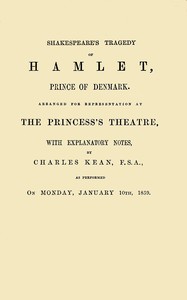
Hamlet, Prince of Denmark
Written by William Shakespeare
Chaptra reads alongside you — AI insights, chapter breakdowns and reader discussions for every book. Join free
About this book
Read it with a club
Chaptra's mystery and crime clubs — small groups reading the same books and talking as they go.


Whodunit Wednesdays
Mystery and crime
- 4 members
- 4 discussions
- Active Sep 11
One mystery a fortnight. We stop at the reveal, everyone posts their accusation, and then we read on together. This is a Chaptra house club — set up and moderated by us to get the conversation going. Open to everyone; jump in anywhere.
Read Hamlet, Prince of Denmark alongside people who are reading it too.
Chaptra Prime — paid clubs, every club feature, and unlimited reading support, for $5 a month or $60 once.
See PrimeReading guide
Themes, characters and key ideas in Hamlet, Prince of Denmark, written by Chaptra AI.
- about 10 hours
- advanced
- dark
- tragic
- philosophical
William Shakespeare's "Hamlet, Prince of Denmark" is a seminal tragedy exploring the depths of human grief, moral dilemma, and the quest for vengeance. Prince Hamlet, reeling from his father's sudden death and his mother's hasty marriage to his uncle Claudius, is confronted by his father's ghost, who reveals he was murdered by Claudius. This revelation plunges Hamlet into a profound existential crisis, as he grapples with the moral implications of revenge and the nature of existence itself. The play meticulously charts Hamlet's descent into feigned or genuine madness, leading to a cascade of tragic events, including the deaths of Ophelia, Polonius, Laertes, Gertrude, Claudius, and ultimately Hamlet himself, culminating in a blood-soaked finale that underscores the destructive power of unchecked ambition and delayed action.
“To be, or not to be: that is the question.”
Key themes
- Revenge and Justice
- The central driving force of the plot, the theme of revenge is explored in its moral complexity and destructive consequences. Hamlet struggles with the ethical implications of taking a life, even for justice, contrasting with the immediate, passionate revenge sought by Laertes and the cold, calculated revenge of Claudius. The play questions whether revenge can truly bring justice or only perpetuates a cycle of violence.
- Existentialism and Mortality
- Hamlet is perhaps Shakespeare's most philosophical play, deeply engaging with questions of life, death, meaning, and the human condition. Hamlet's famous soliloquies grapple with the burden of existence, the fear of the unknown after death, and the futility of action in a seemingly meaningless world. The play confronts the inevitability of death and its leveling effect on all humanity.
- Madness and Sanity
- The play extensively explores the nature of madness, both real and feigned. Hamlet's 'antic disposition' is a strategic ploy to gain freedom of action and observation, but his profound grief and existential despair suggest a genuine psychological unraveling. Ophelia's descent into true madness, triggered by loss and rejection, provides a stark contrast. The theme questions the fine line between sanity and insanity, and how external pressures can break the human mind.
Worth discussing
Is Hamlet truly mad, or is his madness merely an act? What evidence supports each interpretation?
Chapter-by-chapter breakdowns, character arcs and the full thematic analysis come with a free account.
Discussions
No one has started one yet
Questions this book opens up
No discussions yet
Be the first to start a discussion about this book!
Sign up to start the discussionReviews
No reviews yet
Be the first to review this book!