
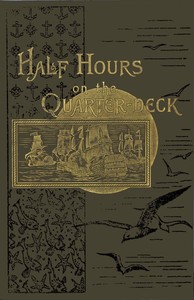
Half hours on the quarter-deck: The Spanish Armada to Sir Cloudesley Shovel 1670
Written by Anonymous
Chaptra reads alongside you — AI insights, chapter breakdowns and reader discussions for every book. Join free
About this book
Reading guide
Themes, characters and key ideas in Half hours on the quarter-deck: The Spanish Armada to Sir Cloudesley Shovel 1670, written by Chaptra AI.
- about 8 hours
- intermediate
- informative
- historical
- adventurous
Half hours on the quarter-deck: The Spanish Armada to Sir Cloudesley Shovel 1670" is a historical collection offering concise accounts of significant naval events and figures spanning from the defeat of the Spanish Armada in 1588 to the era leading up to Sir Cloudesley Shovel's prominence around 1670. The book likely serves as an accessible introduction to English maritime history, presenting key battles, strategic developments, and the heroic deeds of naval commanders. It aims to inform and perhaps inspire readers by chronicling the foundational period of Britain's naval power. The anonymous authorship suggests it might be a compilation of previously known historical anecdotes or a popular history intended for a broad audience.
“"The defeat of the Spanish Armada marked a new epoch in maritime power, shifting the balance irrevocably."”
Key themes
- The Rise of English Naval Power
- This is the overarching theme, chronicling how England transformed from a secondary naval power to a dominant force through strategic victories, technological advancements, and the development of a professional navy. The book tracks this evolution from the Armada's defeat to the robust navy of the late 17th century.
- Heroism and Leadership
- The book highlights the individual bravery and strategic genius of naval commanders and sailors, portraying them as national heroes. It explores how effective leadership in moments of crisis, innovation in battle, and personal courage were crucial to England's naval successes.
- Technological and Tactical Innovation
- The book implicitly traces the evolution of naval warfare, from the shift from boarding actions to cannon-based engagements, to improvements in ship design, navigation, and fleet maneuvers. It showcases how adapting to new technologies and developing sophisticated tactics were vital for naval supremacy.
Worth discussing
How did the events covered in this book contribute to the development of Britain's identity as a maritime nation?
Chapter-by-chapter breakdowns, character arcs and the full thematic analysis come with a free account.
Discussions
No one has started one yet
Questions this book opens up
No discussions yet
Be the first to start a discussion about this book!
Sign up to start the discussionReviews
No reviews yet
Be the first to review this book!