
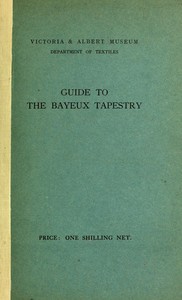
Guide to the Bayeux tapestry
Written by Francis Birrell
Chaptra reads alongside you — AI insights, chapter breakdowns and reader discussions for every book. Join free
About this book
Reading guide
Themes, characters and key ideas in Guide to the Bayeux tapestry, written by Chaptra AI.
- about 8 hours
- intermediate
- informative
- historical
- analytical
Francis Birrell's "Guide to the Bayeux Tapestry," published in 1921, offers a meticulous and comprehensive overview of the iconic medieval embroidery depicting the Norman Conquest of England in 1066. The book meticulously describes each scene, from Harold Godwinson's ill-fated journey to Normandy and his oath to William the Conqueror, to the decisive Battle of Hastings. Birrell delves into the tapestry's historical context, its artistic details, and its inherent Norman bias, highlighting how it presents a narrative favorable to the conquerors. Furthermore, the guide provides translations and interpretations of the accompanying Latin inscriptions, enriching the reader's understanding of this invaluable historical and artistic document. It serves as an essential resource for those interested in medieval history, art history, and the pivotal events that shaped England's destiny.
“"The Tapestry is not merely a chronicle of events, but a deliberate narrative crafted to legitimize the Norman claim."”
Key themes
- Historical Interpretation and Bias
- Birrell meticulously highlights how the Bayeux Tapestry, while depicting historical events, is inherently biased towards the Norman perspective. He shows how scenes are framed, characters are portrayed, and events are selected or emphasized to legitimize William's claim and portray Harold in a less favorable light. This theme explores the idea that history is often written by the victors and how visual narratives can serve propagandistic purposes.
- Art as Historical Document
- Birrell's guide treats the Bayeux Tapestry not just as a beautiful piece of medieval embroidery, but as a primary source for understanding the Norman Conquest. He analyzes its details for insights into medieval warfare, customs, clothing, and daily life, despite its biases. This theme explores the unique value of visual art in conveying historical information and the challenges of interpreting such documents.
- Conquest and Legitimization of Power
- The entire narrative of the Bayeux Tapestry, as interpreted by Birrell, is ultimately about the Norman Conquest and the subsequent legitimization of William's rule. Birrell details how the tapestry constructs a narrative that justifies the invasion, portraying William as the rightful heir and Harold as a usurper. This theme examines the mechanisms by which conquerors seek to establish their authority and rewrite history to suit their narrative.
Worth discussing
How does Birrell's guide influence our understanding of the Bayeux Tapestry as both a historical record and a work of propaganda?
Chapter-by-chapter breakdowns, character arcs and the full thematic analysis come with a free account.
Discussions
No one has started one yet
Questions this book opens up
No discussions yet
Be the first to start a discussion about this book!
Sign up to start the discussionReviews
No reviews yet
Be the first to review this book!