
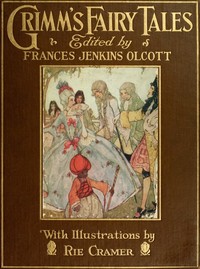
Grimm's Fairy Tales
Written by Jacob Grimm,Wilhelm Grimm
Chaptra reads alongside you — AI insights, chapter breakdowns and reader discussions for every book. Join free
About this book
Read it with a club
Chaptra's fiction clubs — small groups reading the same books and talking as they go.


CraxMe Readers Book Club
Fiction
- 385 members
- 227 discussions
- Started December 2025
Welcome to the Readers Book Club. This is an informal group for like-minded people, where you can discuss books, share and recommend, track your reading progress, and lots more. Discuss Books — all about books. Discuss a particular book or genre, share your favourite quotes. Book Reviews — loved a book and highly recommend it? Or was it just average? Share your review and discuss with fellow readers. (May contain spoilers.) Group Reads — what is a book club without a group read! Buddy Reads — planning to read a book and looking for someone to read it with? Post in the Buddy Read request thread, find a reading buddy, and start discussing.
Read Grimm's Fairy Tales alongside people who are reading it too.
Also here: Doorstops, First Lines Club
Chaptra Prime — paid clubs, every club feature, and unlimited reading support, for $5 a month or $60 once.
See PrimeReading guide
Themes, characters and key ideas in Grimm's Fairy Tales, written by Chaptra AI.
- about 20 hours
- intermediate
- dark
- cautionary
- magical
Grimms' Fairy Tales is a seminal collection of over 200 folk tales, meticulously gathered and refined by Jacob and Wilhelm Grimm in the early 19th century. Far from simple children's stories, these tales delve into complex psychological archetypes, moral dilemmas, and the harsh realities of life, often featuring stark contrasts between good and evil, virtue and vice. The collection preserves a rich tapestry of German oral tradition, offering insights into historical societal values, fears, and aspirations. Its enduring legacy lies in its profound cultural impact, shaping Western storytelling and influencing countless works across literature, art, and psychology.
“"Mirror, mirror on the wall, who is the fairest of them all?"”
Key themes
- Good vs. Evil & Justice/Retribution
- This is perhaps the most pervasive theme. The tales present a world where moral lines are sharply drawn, and characters are clearly good or evil. Virtue is invariably rewarded, often with wealth, power, or marriage, while vice is met with harsh, often gruesome, and fitting punishments. This reinforces a clear moral universe where actions have direct and undeniable consequences.
- Transformation & Coming of Age
- Many tales depict characters undergoing significant changes, both physical and psychological. These transformations often symbolize a journey from innocence to experience, from childhood to adulthood, or from a state of suffering to one of empowerment. Physical transformations (e.g., frogs to princes, cursed individuals returning to human form) are literal manifestations of internal growth or the breaking of a spell.
- The Power of Nature and Magic
- Nature in the Grimms' tales is not merely a setting but an active force, often imbued with magic and sentience. Forests are places of both danger and refuge, where animals can speak, trees can offer shelter, and magical creatures (witches, dwarves, fairies) reside. Magic itself is an inherent, often unexplained, force that dictates destiny, curses, and blessings, providing both obstacles and solutions.
Worth discussing
How do the Grimms' tales reflect the societal values, fears, and beliefs of 19th-century Germany? Are any of these still relevant today?
Chapter-by-chapter breakdowns, character arcs and the full thematic analysis come with a free account.
Discussions
No one has started one yet
Questions this book opens up
No discussions yet
Be the first to start a discussion about this book!
Sign up to start the discussionReviews
No reviews yet
Be the first to review this book!