
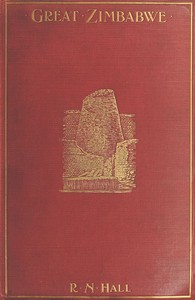
Great Zimbabwe, Mashonaland, Rhodesia: An account of two years' examination work in 1902-4 on behalf of the government of Rhodesia
Written by R. N. (Richard Nicklin) Hall
Chaptra reads alongside you — AI insights, chapter breakdowns and reader discussions for every book. Join free
About this book
Reading guide
Themes, characters and key ideas in Great Zimbabwe, Mashonaland, Rhodesia: An account of two years' examination work in 1902-4 on behalf of the government of Rhodesia, written by Chaptra AI.
- about 12 hours
- advanced
- investigative
- historical
- awe-inspiring
R. N. Hall's "Great Zimbabwe, Mashonaland, Rhodesia" is a foundational early 20th-century historical account documenting his two years of archaeological investigation at the Great Zimbabwe ruins. The book meticulously details the architecture, historical context, and archaeological findings of the site, aiming to clarify its origins and dispel prevalent myths of the era. Hall's narrative begins with his journey to Victoria, Rhodesia, and progresses through his awe-struck exploration of the Elliptical Temple and Acropolis. It combines vivid descriptions of the ancient structures and the surrounding landscape with a systematic examination, setting the stage for a comprehensive understanding of this significant ancient civilization from a colonial archaeological perspective.
“The vastness and imposing nature of these ruins instantly struck us with a sense of awe and profound reverence.”
Key themes
- Colonialism and its Impact on Archaeology
- The book is a product of its time, deeply embedded in the colonial enterprise. It showcases how archaeological research was conducted under colonial rule, often serving to validate colonial ideologies or to appropriate the history of colonized peoples. Hall's work exemplifies the challenges and ethical dilemmas of early colonial archaeology, where the 'discoverer' often claimed authority over the past of the 'discovered' land.
- The Construction of Historical Narratives
- This theme explores how history is written, interpreted, and presented, particularly in a colonial context. Hall's work is an active attempt to construct a 'definitive' history of Great Zimbabwe, often challenging existing popular theories while simultaneously imposing his own interpretations, which were heavily influenced by the racial and cultural biases of his era. It highlights the power dynamics inherent in historical interpretation.
- The Grandeur and Mystery of Ancient Civilizations
- Despite the book's problematic biases, Hall effectively conveys a profound sense of awe and wonder regarding the Great Zimbabwe ruins. This theme highlights humanity's enduring fascination with ancient, powerful, and mysterious civilizations and the impressive architectural feats they achieved. It speaks to the human desire to understand origins and the scale of past human endeavor.
Worth discussing
How does R. N. Hall's colonial perspective influence his interpretations of Great Zimbabwe, and what are the lasting impacts of such biases on historical narratives?
Chapter-by-chapter breakdowns, character arcs and the full thematic analysis come with a free account.
Discussions
No one has started one yet
Questions this book opens up
No discussions yet
Be the first to start a discussion about this book!
Sign up to start the discussionReviews
No reviews yet
Be the first to review this book!