
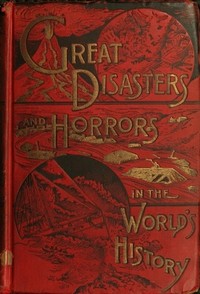
Great Disasters and Horrors in the World's History
Written by Allen Howard Godbey
Chaptra reads alongside you — AI insights, chapter breakdowns and reader discussions for every book. Join free
About this book
Reading guide
Themes, characters and key ideas in Great Disasters and Horrors in the World's History, written by Chaptra AI.
- about 8 hours
- intermediate
- Somber
- Instructive
- Awe-inspiring
Allen Howard Godbey's "Great Disasters and Horrors in the World's History" is a late 19th-century historical compilation chronicling significant natural calamities across various eras and geographies. The book moves beyond mere recitation of events, aiming to explore the underlying scientific principles governing phenomena like tornadoes, floods, earthquakes, and volcanic eruptions. It notably begins by examining ancient myths and personifications of natural forces, illustrating humanity's evolving understanding from mystical interpretations to a more scientific grasp. Throughout, Godbey intertwines thrilling narratives of past disasters with an emphasis on human responses, heroism, and the indomitable spirit displayed in the face of overwhelming adversity.
“From the earliest dawn of human consciousness, the unseen hand of the wind has shaped myth and fear, a capricious deity whose breath brought both life and ruin.”
Key themes
- Human Vulnerability and Resilience
- This theme explores the inherent fragility of human life and civilization when confronted by the overwhelming power of natural disasters. Simultaneously, it highlights humanity's extraordinary capacity for endurance, recovery, and rebuilding in the face of profound loss and devastation. The book emphasizes acts of survival, adaptation, and the collective will to overcome adversity.
- The Power and Indifference of Nature
- Godbey's work consistently portrays nature as an immensely powerful and often indifferent force, capable of unleashing destruction on a grand scale without regard for human life or endeavor. This theme underscores the sublime and terrifying aspects of the natural world, challenging human hubris and reminding readers of their place within the greater cosmic order. It's about recognizing the limits of human control.
- Evolution of Human Understanding: Myth to Science
- A central intellectual thread in the book is the journey of human thought from ancient mythological and superstitious explanations of natural phenomena to a more rational, scientific understanding. Godbey highlights how early cultures personified natural forces, and then traces the gradual development of scientific inquiry that seeks to uncover the underlying 'laws of nature,' reflecting a late 19th-century confidence in scientific progress.
Worth discussing
How has humanity's understanding of natural disasters evolved since the late 19th century, and what implications does this have for contemporary society?
Chapter-by-chapter breakdowns, character arcs and the full thematic analysis come with a free account.
Discussions
No one has started one yet
Questions this book opens up
No discussions yet
Be the first to start a discussion about this book!
Sign up to start the discussionReviews
No reviews yet
Be the first to review this book!