
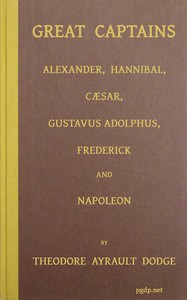
Great captains : $b A course of six lectures showing the influence on the art of war of the campaigns of Alexander, Hannibal, Cæsar, Gustavus Adolphus, Frederick, and Napoleon
Written by Theodore Ayrault Dodge
Chaptra reads alongside you — AI insights, chapter breakdowns and reader discussions for every book. Join free
About this book
Reading guide
Themes, characters and key ideas in Great captains : $b A course of six lectures showing the influence on the art of war of the campaigns of Alexander, Hannibal, Cæsar, Gustavus Adolphus, Frederick, and Napoleon, written by Chaptra AI.
- about 15 hours
- advanced
- analytical
- instructive
- historical
Theodore Ayrault Dodge's "Great Captains" presents a comprehensive historical analysis of six pivotal military leaders: Alexander, Hannibal, Cæsar, Gustavus Adolphus, Frederick, and Napoleon. Through a series of lectures, Dodge meticulously examines their campaigns, strategies, and tactical innovations, demonstrating how each figure profoundly influenced the evolution of the art of war. The book emphasizes the intellectual rigor and strategic foresight inherent in military leadership, arguing that these 'great captains' not only fought battles but also developed overarching concepts that redefined warfare for their respective eras. By exploring the unique blend of intellect, character, and historical circumstances that shaped their doctrines, Dodge provides a foundational understanding of military strategy and its enduring legacy.
“The art of war, in its highest sense, is the art of applying intellect to the control of physical force.”
Key themes
- The Evolution of Warfare
- This theme is central to the entire book, as Dodge traces how military strategy, tactics, and organization transformed from ancient times through the early modern era. Each 'great captain' represents a distinct phase of this evolution, introducing innovations that fundamentally altered the conduct of war.
- Military Leadership and Genius
- Dodge explores the qualities that define exceptional military leadership, emphasizing not just bravery but strategic foresight, tactical acumen, and the ability to inspire and manage large forces. The book argues that true military genius is a rare combination of intellect, character, and practical skill.
- The Interplay of Intellect, Character, and Circumstance
- This theme highlights Dodge's argument that military success is a product of multiple interacting factors. The individual commander's intellectual capacity and personal character are crucial, but they must also contend with and exploit the specific historical, geographical, and political circumstances of their time.
Worth discussing
To what extent does Dodge's 'great man' theory of history accurately explain the evolution of warfare, or does it overlook other crucial factors?
Chapter-by-chapter breakdowns, character arcs and the full thematic analysis come with a free account.
Discussions
No one has started one yet
Questions this book opens up
No discussions yet
Be the first to start a discussion about this book!
Sign up to start the discussionReviews
No reviews yet
Be the first to review this book!