
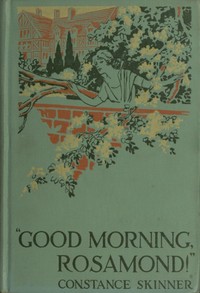
"Good-Morning, Rosamond!"
Written by Constance Lindsay Skinner
Chaptra reads alongside you — AI insights, chapter breakdowns and reader discussions for every book. Join free
About this book
Reading guide
Themes, characters and key ideas in "Good-Morning, Rosamond!", written by Chaptra AI.
- about 8 hours
- intermediate
- uplifting
- reflective
- romantic
Constance Lindsay Skinner's "Good-Morning, Rosamond!" introduces Rosamond Mearely, a young, wealthy widow in the early 20th-century hamlet of Roseborough. Having shed the constraints of her late husband's legacy, Rosamond embarks on a journey of self-discovery, challenging the rigid societal expectations imposed by her community and her domestic staff. The novel chronicles her quest to redefine her identity and embrace her youth, beauty, and desire for genuine love and adventure. It delves into the complexities of personal freedom against the backdrop of a high-society life, as Rosamond strives to live authentically on what she envisions as her "Wonderful Day."
“"The world had not ended with Hibbert, only a certain kind of world, one Rosamond had never truly chosen for herself."”
Key themes
- Societal Expectations vs. Personal Freedom
- This is the central conflict of the novel, exploring how Rosamond navigates the rigid norms and expectations placed upon her as a wealthy widow in early 20th-century society. The theme highlights the tension between the prescribed roles for women and the individual's yearning for autonomy and self-expression.
- Identity and Self-Discovery
- The novel traces Rosamond's journey from an identity largely defined by her late husband and her social status to one she actively crafts for herself. It delves into the process of shedding old skins and embracing a truer, more authentic self, exploring what it means to be an individual beyond external labels.
- Love, Marriage, and Happiness
- This theme examines the nature of love and marriage, contrasting a marriage of convenience or duty (Rosamond's past) with the pursuit of genuine affection and personal fulfillment. It questions whether happiness can truly be found within societal structures or if it requires a more radical departure from convention.
Worth discussing
How do the domestic routines and the characters of Amanda and Jemima Frigget symbolize the broader societal expectations placed upon Rosamond?
Chapter-by-chapter breakdowns, character arcs and the full thematic analysis come with a free account.
Discussions
No one has started one yet
Questions this book opens up
No discussions yet
Be the first to start a discussion about this book!
Sign up to start the discussionReviews
No reviews yet
Be the first to review this book!