
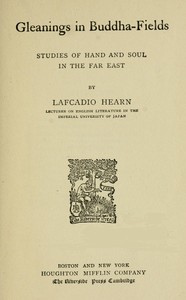
Gleanings in Buddha-Fields: Studies of Hand and Soul in the Far East
Written by Lafcadio Hearn
Chaptra reads alongside you — AI insights, chapter breakdowns and reader discussions for every book. Join free
About this book
Reading guide
Themes, characters and key ideas in Gleanings in Buddha-Fields: Studies of Hand and Soul in the Far East, written by Chaptra AI.
- about 8 hours
- intermediate
- evocative
- reflective
- spiritual
Lafcadio Hearn's "Gleanings in Buddha-Fields" is a captivating collection of late 19th-century essays that meticulously explores the spiritual and cultural landscape of Japan. Through personal reflection and vivid description, Hearn delves into the intricate philosophies of Buddhism and Shintoism, revealing their profound influence on daily Japanese life and artistic expression. The work emphasizes the intimate connection between nature, ancestor worship, and the divine, portraying Shinto shrines not merely as structures but as living embodiments of spirits. Ultimately, Hearn offers a deeply empathetic and imaginative interpretation of the Far East, inviting readers to perceive the serene beauty and profound spiritual depth inherent in Japanese existence.
“To understand the Japanese soul, one must first feel the whisper of the kami in the ancient trees.”
Key themes
- The Intertwining of Nature and Spirituality
- This theme explores how Japanese spiritual beliefs, particularly Shinto and aspects of Buddhism, are deeply integrated with the natural world. Hearn illustrates the reverence for natural elements (trees, mountains, rivers) as homes for kami (deities/spirits) and how this connection shapes religious practices, aesthetic sensibilities, and daily life. The landscape itself is imbued with sacred meaning.
- Cultural Interpretation and Cross-Cultural Understanding
- Hearn's primary goal is to interpret and convey the essence of Japanese culture and spirituality to a Western audience. He acts as a mediator, attempting to bridge the cultural divide by explaining customs, beliefs, and artistic expressions in a way that is both empathetic and illuminating, often contrasting Japanese perspectives with Western ones to highlight uniqueness.
- The Presence of the Divine and Ancestral Spirits in Daily Life
- Hearn explores how the divine, in the form of kami and ancestral spirits, is not confined to temples but is an active, palpable presence woven into the fabric of everyday Japanese life. This theme encompasses ancestor worship, the belief in spirits inhabiting objects or places, and the pervasive sense of a spiritual dimension underlying the material world.
Worth discussing
How does Hearn's personal perspective as a Westerner living in Japan shape his interpretations of Japanese culture and religion?
Chapter-by-chapter breakdowns, character arcs and the full thematic analysis come with a free account.
Discussions
No one has started one yet
Questions this book opens up
No discussions yet
Be the first to start a discussion about this book!
Sign up to start the discussionReviews
No reviews yet
Be the first to review this book!