
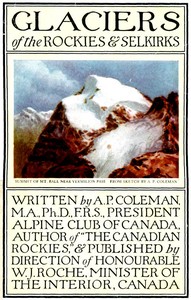
Glaciers of the Rockies and Selkirks, 2nd. ed.: With Notes on Five Great Glaciers of the Canadian National Parks
Written by A. P. (Arthur Philemon) Coleman
Chaptra reads alongside you — AI insights, chapter breakdowns and reader discussions for every book. Join free
About this book
Reading guide
Themes, characters and key ideas in Glaciers of the Rockies and Selkirks, 2nd. ed.: With Notes on Five Great Glaciers of the Canadian National Parks, written by Chaptra AI.
- about 8 hours
- advanced
- Informative
- Awe-inspiring
- Scientific
A. P. Coleman's "Glaciers of the Rockies and Selkirks, 2nd ed." is a seminal early 20th-century scientific work offering an exhaustive examination of the glaciers within the Canadian Rocky and Selkirk Mountains. Blending rigorous geological observation with a profound appreciation for natural beauty, the book meticulously details glacial formation, movement, and their geomorphological impact. It serves as a crucial historical document, charting the characteristics of specific glaciers like the Yoho and Illecillewaet, and provides an invaluable snapshot of these dynamic landscapes before significant modern changes. With contributions from A. O. Wheeler, it underscores the importance of systematic scientific exploration in understanding Earth's powerful, ever-changing features.
“"The slow, inexorable march of these icy rivers, carving their indelible signatures upon the bedrock, reveals a power of erosion almost beyond human comprehension."”
Key themes
- Glacial Geomorphology and Dynamics
- This is the core scientific theme, exploring the physical processes of glacier formation, movement (flow rates, crevasses), erosion (cirques, valleys, moraines), and deposition. Coleman meticulously details the mechanics by which glaciers sculpt and transform mountainous landscapes.
- Environmental Observation and Change
- The book serves as an early document of environmental monitoring, recording the state and changes of glaciers in the early 20th century. It highlights the dynamic nature of these systems and implicitly touches upon the concept of climatic influence on glacial behavior, even if not fully understood in modern terms.
- Scientific Documentation and Exploration
- The book itself is a testament to the process and value of systematic scientific exploration in the early 20th century. It highlights the dedication required for fieldwork, the meticulousness of data collection, and the importance of publishing findings to advance collective knowledge.
Worth discussing
How does Coleman's early 20th-century glaciological understanding compare with modern scientific consensus on glacial dynamics and climate change?
Chapter-by-chapter breakdowns, character arcs and the full thematic analysis come with a free account.
Discussions
No one has started one yet
Questions this book opens up
No discussions yet
Be the first to start a discussion about this book!
Sign up to start the discussionReviews
No reviews yet
Be the first to review this book!