
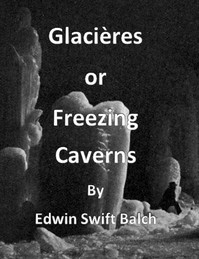
Glacières; or, Freezing Caverns
Written by Edwin Swift Balch
Chaptra reads alongside you — AI insights, chapter breakdowns and reader discussions for every book. Join free
About this book
Reading guide
Themes, characters and key ideas in Glacières; or, Freezing Caverns, written by Chaptra AI.
- about 8 hours
- intermediate
- exploratory
- scientific
- awe-inspiring
Edwin Swift Balch's "Glacières; or, Freezing Caverns" is a late 19th-century scientific treatise that meticulously documents the author's extensive observations of subterranean ice formations across Europe. The work begins with Balch's personal revelation of finding ice in late summer on Mount Adams, sparking his journey into glaciology. He then recounts his expeditions through the Alps and various French glacières, detailing their unique geological and climatic features, such as impressive ice columns and stalactites. Beyond a mere travelogue, the book serves as a scientific inquiry into the environmental conditions governing these natural wonders, blending adventurous exploration with rigorous observation. It invites readers to appreciate the mesmerizing beauty and scientific intricacies of these hidden icy worlds.
“"The surprise of finding ice in late summer, even in the depths of King's Ravine, was the spark that ignited a profound curiosity."”
Key themes
- Scientific Inquiry and Empirical Observation
- Central to Balch's work is the methodical pursuit of knowledge through direct observation and systematic analysis. The book exemplifies the scientific method of the late 19th century, where personal exploration and detailed record-keeping were paramount. Balch not only describes the glacières but also seeks to understand the underlying physical laws and environmental conditions that govern their existence, transforming personal experience into scientific data.
- The Wonders of Nature and the Sublime
- This theme explores the awe-inspiring beauty, mystery, and grandeur found within the hidden, icy depths of glacières. Balch consistently conveys a sense of wonder and reverence for these natural formations, emphasizing their unique aesthetic qualities and the profound impact they have on the observer. The subterranean ice, with its columns and stalactites, is presented not just as a scientific phenomenon but as a testament to nature's artistry.
- Human Curiosity and the Spirit of Exploration
- This theme highlights the inherent human drive to explore, discover, and understand the unknown. Balch's personal journey, spurred by a moment of unexpected discovery, embodies the adventurous spirit of 19th-century explorers who ventured into uncharted territories, both geographically and intellectually. The book celebrates the courage and perseverance required to venture into challenging environments for the sake of knowledge.
Worth discussing
How does Balch's personal encounter with ice on Mount Adams serve as a powerful motivator for his subsequent scientific inquiry?
Chapter-by-chapter breakdowns, character arcs and the full thematic analysis come with a free account.
Discussions
No one has started one yet
Questions this book opens up
No discussions yet
Be the first to start a discussion about this book!
Sign up to start the discussionReviews
No reviews yet
Be the first to review this book!