
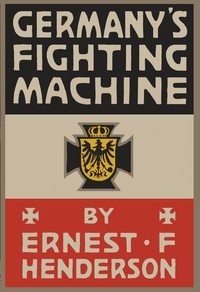
Germany's Fighting Machine: Her Army, her Navy, her Air-ships and Why She Arrayed Them Against the Allied Powers of Europe
Written by Ernest F. (Ernest Flagg) Henderson
Chaptra reads alongside you — AI insights, chapter breakdowns and reader discussions for every book. Join free
About this book
Read it with a club
Chaptra's history and war clubs — small groups reading the same books and talking as they go.


Footnotes & Firefights
History and war
- 4 members
- 4 discussions
- Active Sep 11
Military history, from grand strategy down to the deeply boring logistics that actually decided everything. This is a Chaptra house club — set up and moderated by us to get the conversation going. Open to everyone; jump in anywhere.
Read Germany's Fighting Machine: Her Army, her Navy, her Air-ships and Why She Arrayed Them Against the Allied Powers of Europe alongside people who are reading it too.
Also here: Empire, Reconsidered
Chaptra Prime — paid clubs, every club feature, and unlimited reading support, for $5 a month or $60 once.
See PrimeReading guide
Themes, characters and key ideas in Germany's Fighting Machine: Her Army, her Navy, her Air-ships and Why She Arrayed Them Against the Allied Powers of Europe, written by Chaptra AI.
- about 10 hours
- advanced
- Informative
- Analytical
- Somber
Ernest F. Henderson's "Germany's Fighting Machine" offers a crucial early 20th-century historical account, meticulously dissecting the formidable German military—its army, navy, and nascent air forces—just prior to World War I. The book begins with the author's personal observations of a rapidly changing Germany, transitioning from admiration to a stark realization of impending conflict. Henderson delves into the historical context, analyzing public sentiment and geopolitical tensions, particularly regarding Russia and the Franco-Russian alliance. This detailed examination serves as a prescient look into the escalating dynamics that would soon plunge Europe into war, providing a valuable contemporary perspective on Germany's military ambitions and capabilities.
“The transformation from admiring Germany's achievements to realizing her martial intent was swift and chilling.”
Key themes
- Militarism and National Identity
- The book extensively explores how militarism was deeply interwoven into German national identity and societal structure. Henderson analyzes how the military's prestige, organization, and influence permeated various aspects of German life, shaping public sentiment and policy. This theme highlights the symbiotic relationship between a nation's self-perception and its military might.
- Pre-War Diplomacy and Tensions
- Henderson meticulously details the complex diplomatic environment and the escalating tensions leading up to WWI. He focuses on the web of alliances (e.g., Franco-Russian) and the mutual suspicions that fueled an arms race and ultimately made conflict seem inevitable. This theme underscores the fragility of peace when distrust and competing national interests dominate international relations.
- The Industrialization of Warfare
- The book provides a detailed look at the technological advancements and industrial capacity underpinning Germany's military might. Henderson examines the sophistication of the German army, navy, and nascent air forces, illustrating how industrialization had transformed the scale and destructive potential of warfare. This theme highlights the shift from traditional warfare to modern, technologically driven conflict.
Worth discussing
How does Henderson's personal experience shape his analysis, and does it introduce bias?
Chapter-by-chapter breakdowns, character arcs and the full thematic analysis come with a free account.
Discussions
No one has started one yet
Questions this book opens up
No discussions yet
Be the first to start a discussion about this book!
Sign up to start the discussionReviews
No reviews yet
Be the first to review this book!