
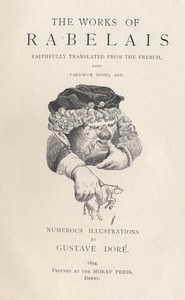
Gargantua and Pantagruel, Illustrated, Book 2
Written by François Rabelais
Chaptra reads alongside you — AI insights, chapter breakdowns and reader discussions for every book. Join free
About this book
Reading guide
Themes, characters and key ideas in Gargantua and Pantagruel, Illustrated, Book 2, written by Chaptra AI.
- about 12 hours
- advanced
- Humorous
- Satirical
- Philosophical
François Rabelais's "Gargantua and Pantagruel, Illustrated, Book 2" continues the satirical adventures of the giant Gargantua and introduces his equally prodigious son, Pantagruel. Set against the backdrop of the Renaissance, this book blends uproarious humor with profound philosophical musings, challenging the societal and intellectual norms of its time. It chronicles Pantagruel's birth, his prodigious growth, and his extensive education, culminating in his early exploits and encounters with various eccentric characters. Through linguistic invention, elaborate allegories, and biting satire, Rabelais explores themes of humanism, education, justice, and the inherent follies of humankind, inviting readers into a world where the absurd illuminates the real.
“I find that I am not so much afraid of nothing as I am of being nothing.”
Key themes
- Education and Humanism
- Rabelais uses Pantagruel's extensive education and Gargantua's famous letter to champion Renaissance humanism over the pedantry of scholasticism. He advocates for a broad, interdisciplinary curriculum encompassing languages, sciences, arts, and practical skills, aimed at developing a virtuous and well-rounded individual capable of critical thought and moral action.
- Satire of Society and Institutions
- Rabelais relentlessly satirizes the follies and corruption within various societal institutions, including the legal system, academia, and warfare. He exposes the absurdity, hypocrisy, and inefficiency through exaggerated scenarios, linguistic play, and direct critique, often using humor as a sharp tool for social commentary.
- Language and Rhetoric
- Rabelais's work is a celebration and deconstruction of language itself. He demonstrates an extraordinary command of rhetoric, employing vast vocabularies, inventive wordplay, neologisms, and elaborate lists. This linguistic exuberance is not merely for show; it serves to mock pretentious speech, highlight the power and limitations of words, and create a dynamic, immersive world.
Worth discussing
How does Rabelais use humor, particularly crude or scatological humor, to achieve his satirical goals?
Chapter-by-chapter breakdowns, character arcs and the full thematic analysis come with a free account.
Discussions
No one has started one yet
Questions this book opens up
No discussions yet
Be the first to start a discussion about this book!
Sign up to start the discussionReviews
No reviews yet
Be the first to review this book!