
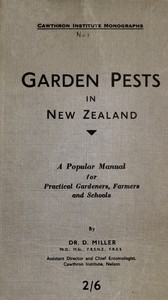
Garden Pests in New Zealand: A Popular Manual for Practical Gardeners, Farmers and Schools
Written by David Miller
Chaptra reads alongside you — AI insights, chapter breakdowns and reader discussions for every book. Join free
About this book
Reading guide
Themes, characters and key ideas in Garden Pests in New Zealand: A Popular Manual for Practical Gardeners, Farmers and Schools, written by Chaptra AI.
- about 8 hours
- intermediate
- Informative
- Educational
- Practical
David Miller's "Garden Pests in New Zealand" is a foundational scientific manual designed to empower New Zealand's gardeners, farmers, and students with practical knowledge about horticultural pests. The book systematically identifies various detrimental and beneficial animals, emphasizing the significant impact of introduced species on the local ecosystem following European agricultural practices. It demystifies complex scientific concepts, providing accessible yet accurate information on pest identification and control methods. By stressing the importance of recognizing both threats and allies within the animal kingdom, Miller's work serves as a crucial educational tool for fostering sustainable horticultural practices and ecological awareness across the nation.
“The identification of beneficial insects is as crucial as recognizing the detrimental ones.”
Key themes
- Practical Scientific Education
- The book's explicit purpose is to make scientific information accessible and useful for practical gardeners, farmers, and schools. It champions the idea that scientific knowledge, when properly disseminated and simplified, can empower individuals to solve real-world problems and make informed decisions.
- Ecological Balance and Biodiversity
- The book deeply explores the concept of ecological balance within garden and agricultural settings, stressing that not all insects are pests and many are crucial for a healthy ecosystem. It highlights the disruption caused by introduced species and the importance of understanding the web of life to manage pests effectively.
- The Impact of Invasive Species
- A core theme is the significant impact of species introduced alongside European agricultural practices into New Zealand. This highlights how human activities can fundamentally alter natural environments and create new challenges for native ecosystems and agricultural productivity.
Worth discussing
How has the introduction of European agricultural practices impacted New Zealand's native ecosystems and biodiversity?
Chapter-by-chapter breakdowns, character arcs and the full thematic analysis come with a free account.
Discussions
No one has started one yet
Questions this book opens up
No discussions yet
Be the first to start a discussion about this book!
Sign up to start the discussionReviews
No reviews yet
Be the first to review this book!