
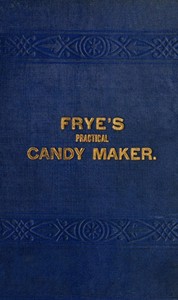
Frye's Practical Candy Maker: Comprising Practical Receipts for the Manufacture of Fine "Hand-Made" Candies
Written by George V. Frye
Chaptra reads alongside you — AI insights, chapter breakdowns and reader discussions for every book. Join free
About this book
Reading guide
Themes, characters and key ideas in Frye's Practical Candy Maker: Comprising Practical Receipts for the Manufacture of Fine "Hand-Made" Candies, written by Chaptra AI.
- about 6 hours
- intermediate
- instructive
- practical
- historical
George V. Frye's "Frye's Practical Candy Maker" is a late 19th-century instructional guide designed for confectioners, especially small-scale retailers, aiming to produce high-quality, hand-made candies. The book provides a wealth of practical recipes and fundamental techniques, emphasizing quality ingredients and straightforward methods to create appealing sweets without requiring highly skilled labor. Frye's intent is to empower confectioners to enhance their offerings, attract customers, and thrive in a competitive market by delivering accessible, actionable knowledge. It serves as a historical snapshot of confectionery practices and entrepreneurial spirit during its era.
“"The author's intent to deliver practical, straightforward recipes rather than elaborate theorizing about confectionery."”
Key themes
- Practicality and Application
- The core theme of the book is its unwavering focus on practical, actionable knowledge over theoretical exposition. Frye prioritizes direct instruction and tested recipes to ensure confectioners can immediately apply the information to their trade.
- Entrepreneurship and Small Business Empowerment
- Frye's book is designed to support and uplift small-scale confectioners, providing them with the tools to compete and succeed. It's a guide for enhancing business offerings and attracting customers without significant investment in highly skilled labor.
- Quality and Craftsmanship
- A fundamental principle throughout the book is the importance of using quality materials and executing techniques with precision to produce superior products. Frye implicitly argues that quality is key to customer satisfaction and business longevity.
Worth discussing
How does Frye's emphasis on 'hand-made' candies reflect the consumer preferences and industrial capabilities of the late 19th century?
Chapter-by-chapter breakdowns, character arcs and the full thematic analysis come with a free account.
Discussions
No one has started one yet
Questions this book opens up
No discussions yet
Be the first to start a discussion about this book!
Sign up to start the discussionReviews
No reviews yet
Be the first to review this book!