
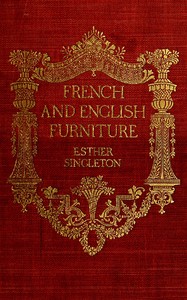
French and English furniture: distinctive styles and periods described and illustrated
Written by Esther Singleton
Chaptra reads alongside you — AI insights, chapter breakdowns and reader discussions for every book. Join free
About this book
Reading guide
Themes, characters and key ideas in French and English furniture: distinctive styles and periods described and illustrated, written by Chaptra AI.
- about 8 hours
- advanced
- Informative
- Scholarly
- Historical
Esther Singleton's "French and English Furniture" is an early 20th-century historical account offering a comprehensive guide to furniture styles and decorative arts from the French Renaissance through various English periods. Targeting collectors, students, and interior decorators, the book meticulously describes distinctive characteristics, functions, and historical contexts of each style. Singleton's primary aim is to equip readers with the knowledge to appropriately furnish rooms in specific historical aesthetics, filling a perceived void in comparable illustrated works. The text delves into intricate details of craftsmanship, upholstery, and decorative elements, tracing the artistic evolution and shifting tastes across centuries.
“The purpose of this book is to give an extensive overview of French and English furniture from the Renaissance onward, so that collectors, students, and decorators may be guided in furnishing rooms in any given style.”
Key themes
- The Evolution of Decorative Arts and Taste
- This theme explores the chronological development of French and English furniture styles, demonstrating how design forms, materials, and ornamentation changed over centuries. It highlights the ebb and flow of aesthetic preferences, from the weighty grandeur of the Renaissance to the delicate curves of Rococo and the classical revival of Neoclassicism, illustrating how each period reacted to or built upon its predecessors.
- Craftsmanship and Artistic Innovation
- Singleton places significant emphasis on the skill, ingenuity, and artistic merit of the artisans, cabinetmakers, carvers, and upholsterers who created these historical pieces. This theme celebrates the technical mastery required to transform raw materials into functional works of art, detailing specific techniques and the contributions of influential designers.
- Historical and Social Context of Design
- This theme explores how furniture styles were not merely arbitrary aesthetic choices but deeply embedded within the social, political, and cultural milieu of their respective eras. Singleton illustrates how furniture served specific functions, reflected societal hierarchies, and adapted to changing domestic practices and architectural trends.
Worth discussing
How do furniture styles reflect the social, political, and economic conditions of their time?
Chapter-by-chapter breakdowns, character arcs and the full thematic analysis come with a free account.
Discussions
No one has started one yet
Questions this book opens up
No discussions yet
Be the first to start a discussion about this book!
Sign up to start the discussionReviews
No reviews yet
Be the first to review this book!