
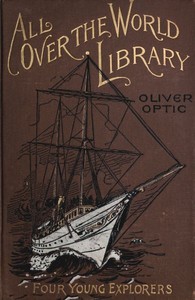
Four Young Explorers; Or, Sight-Seeing in the Tropics
Written by Oliver Optic
Chaptra reads alongside you — AI insights, chapter breakdowns and reader discussions for every book. Join free
About this book
Reading guide
Themes, characters and key ideas in Four Young Explorers; Or, Sight-Seeing in the Tropics, written by Chaptra AI.
- about 8 hours
- intermediate
- adventurous
- exciting
- educational
Oliver Optic's "Four Young Explorers; Or, Sight-Seeing in the Tropics" is a late 19th-century adventure novel chronicling the escapades of Louis Belgrave and his companions. Weary of conventional European sightseeing, the young men embark on a three-week expedition into the Borneo wilderness, leaving their cruise ship, the Guardian-Mother. Accompanied by a native guide, Achang, they journey up the Sarawak River in a steam-launch, the Blanchita, eager for a more primitive and adventurous lifestyle. The narrative focuses on their hands-on exploration of tropical environments, engaging in hunting, fishing, and discovering local flora, fauna, and cultures. The book sets the stage for a coming-of-age journey where the boys learn about themselves and the natural world through direct experience.
“"We have seen enough of painted palaces and musty monuments; it is time we saw the living pulse of the wild world!"”
Key themes
- Exploration and Adventure
- This is the central theme, driving the entire narrative. The book romanticizes the act of venturing into unknown territories, emphasizing the excitement, challenges, and rewards of discovery. It celebrates the human spirit's desire to push boundaries and experience the world firsthand, moving beyond passive observation to active engagement.
- Nature vs. Civilization
- The book explicitly contrasts the 'routine sightseeing of cities and monuments' with the 'primitive lifestyle' of the tropics. It suggests that true fulfillment and education can be found by reconnecting with nature, away from the artificial constructs and comforts of civilization. This theme explores the perceived purity and authenticity of the wilderness against the perceived superficiality or weariness of urban life.
- Education and Experiential Learning
- The novel champions a form of education derived from direct experience rather than academic study or passive observation. The young explorers learn about geography, biology, and survival by doing, seeing, and adapting in a real-world, challenging environment. It promotes the idea that true knowledge comes from hands-on engagement with the world.
Worth discussing
How does the book's portrayal of 'sight-seeing in the tropics' differ from traditional tourism, and what does this say about the explorers' motivations?
Chapter-by-chapter breakdowns, character arcs and the full thematic analysis come with a free account.
Discussions
No one has started one yet
Questions this book opens up
No discussions yet
Be the first to start a discussion about this book!
Sign up to start the discussionReviews
No reviews yet
Be the first to review this book!