
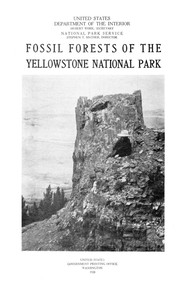
Fossil Forests of the Yellowstone National Park
Written by Frank Hall Knowlton
Chaptra reads alongside you — AI insights, chapter breakdowns and reader discussions for every book. Join free
About this book
Reading guide
Themes, characters and key ideas in Fossil Forests of the Yellowstone National Park, written by Chaptra AI.
- about 8 hours
- advanced
- Informative
- Scientific
- Descriptive
Frank Hall Knowlton's "Fossil Forests of the Yellowstone National Park" is a seminal early 20th-century scientific work detailing the remarkable petrified forests within Yellowstone. The book meticulously explores the geological processes, primarily volcanic activity, that led to the preservation of ancient trees in their upright positions across sites like Specimen Ridge and Amethyst Mountain. Knowlton provides detailed observations on the composition of these ancient forests, identifying various tree species and elucidating the fossilization mechanisms. Beyond mere description, the work delves into the paleoecological implications, suggesting past climatic conditions vastly different from modern Yellowstone, thereby significantly enriching the understanding of the park's deep-time botanical and geological heritage.
“The fossil forests of Yellowstone National Park present one of the most remarkable instances of ancient plant preservation known anywhere in the world.”
Key themes
- Geological Time and Deep History
- The book profoundly illustrates the vastness of geological time, showcasing how landscapes and life forms evolve over millions of years through processes like volcanism and fossilization. It forces a contemplation of timescales far beyond human experience.
- Volcanic Activity and Preservation
- A core theme is the dual nature of volcanic activity as both destructive and preserving. Knowlton details how repeated eruptions, while burying living forests, also created the unique conditions for their petrification in an upright position.
- Paleoecology and Climate Change
- Knowlton's analysis of the fossil flora allows for a reconstruction of ancient ecosystems and climates, revealing that Yellowstone once supported subtropical or warm-temperate forests, vastly different from its current environment.
Worth discussing
How does Knowlton's work exemplify the scientific method in the early 20th century, particularly regarding observation, hypothesis, and evidence?
Chapter-by-chapter breakdowns, character arcs and the full thematic analysis come with a free account.
Discussions
No one has started one yet
Questions this book opens up
No discussions yet
Be the first to start a discussion about this book!
Sign up to start the discussionReviews
No reviews yet
Be the first to review this book!