
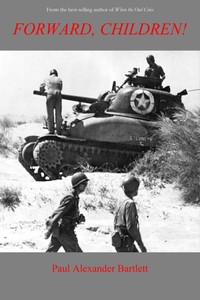
Forward, Children!
Written by Paul Alexander Bartlett
Chaptra reads alongside you — AI insights, chapter breakdowns and reader discussions for every book. Join free
About this book
Read it with a club
Chaptra's history and war clubs — small groups reading the same books and talking as they go.


Footnotes & Firefights
History and war
- 4 members
- 4 discussions
- Active Sep 11
Military history, from grand strategy down to the deeply boring logistics that actually decided everything. This is a Chaptra house club — set up and moderated by us to get the conversation going. Open to everyone; jump in anywhere.
Read Forward, Children! alongside people who are reading it too.
Also here: Empire, Reconsidered
Chaptra Prime — paid clubs, every club feature, and unlimited reading support, for $5 a month or $60 once.
See PrimeReading guide
Themes, characters and key ideas in Forward, Children!, written by Chaptra AI.
- about 8 hours
- intermediate
- dark
- grim
- poignant
Paul Alexander Bartlett's posthumously published anti-war novel, "Forward, Children!", offers a visceral and deeply psychological portrayal of World War II tank warfare. The narrative centers on Orville Dennison, a soldier grappling with the brutal realities of combat while simultaneously wrestling with poignant memories of his life before the conflict. Through vivid descriptions of cold nights, distant shellfire, and the camaraderie among his crew, the book immerses readers in the grim atmosphere of the front lines. It poignantly explores the conflict between the enduring human spirit and the dehumanizing experiences of war, establishing a powerful anti-war message through Dennison's internal and external struggles. The novel serves as a stark reminder of the profound emotional and physical toll exacted by armed conflict.
“The steel shell of the tank was a coffin, a tomb that moved, and we were its living dead.”
Key themes
- The Horrors of War
- This theme is central, depicting the brutal, dehumanizing realities of tank warfare, including graphic violence, the constant threat of death, and the sensory overload of combat. It challenges any romanticized notions of war.
- Psychological Toll and Trauma
- Explores the profound mental and emotional impact of combat on soldiers, focusing on Orville Dennison's internal struggles, his coping mechanisms, and the development of trauma and detachment.
- Memory vs. Reality
- This theme highlights the stark contrast between the brutal reality of the battlefield and the idealized or peaceful memories of home, serving as both a coping mechanism and a source of profound anguish for Orville Dennison.
Worth discussing
How does the novel use Orville Dennison's memories to highlight the psychological toll of war?
Chapter-by-chapter breakdowns, character arcs and the full thematic analysis come with a free account.
Discussions
No one has started one yet
Questions this book opens up
No discussions yet
Be the first to start a discussion about this book!
Sign up to start the discussionReviews
No reviews yet
Be the first to review this book!