
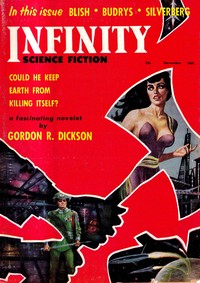
Formula for murder
Written by Milton A. Rothman
Chaptra reads alongside you — AI insights, chapter breakdowns and reader discussions for every book. Join free
About this book
Reading guide
Themes, characters and key ideas in Formula for murder, written by Chaptra AI.
- about 8 hours
- intermediate
- mysterious
- dark
- tense
Lee Gregor's "Formula for Murder" is a compelling crime fiction novel from the late 1950s, blending psychological thriller and science fiction elements. Set aboard a space station, the narrative centers on physicist Jim Britten, whose mentor, Professor Glover, dies under mysterious circumstances. What initially appears to be an accident unravels through Britten's therapy, revealing a complex web of ambition, memory suppression, and a deeper involvement with a nefarious organization. The story delves into the dark implications of advanced psychotherapeutic techniques, questioning identity, truth, and the ethical boundaries of scientific pursuit.
“No specific quotes are available from the provided summary. Quotes would likely revolve around the nature of truth, memory, scientific ambition, and the moral ambiguity of advanced technology.”
Key themes
- Scientific Ethics and Responsibility
- The novel critically examines the implications of advanced psychotherapeutic techniques and the 'darker sides of scientific discovery.' It questions the moral boundaries of manipulating the human mind and the responsibility scientists bear for the applications of their research, especially in high-stakes environments like a space station.
- Identity and Memory
- A central theme revolving around Jim Britten's unraveling memories and the questioning of his 'true identity.' The novel explores how memory can be suppressed, distorted, or revealed, and how these processes shape one's sense of self, especially when influenced by trauma, ambition, or external manipulation.
- Truth and Deception
- The narrative constantly questions the nature of truth, particularly through Britten's unreliable memories and his capacity for manipulation. What is initially presented as an accident is revealed as murder, and Britten's identity itself is subject to re-evaluation, forcing the reader to discern truth from various layers of deception.
Worth discussing
How does the space station setting amplify the psychological themes of the novel?
Chapter-by-chapter breakdowns, character arcs and the full thematic analysis come with a free account.
Discussions
No one has started one yet
Questions this book opens up
No discussions yet
Be the first to start a discussion about this book!
Sign up to start the discussionReviews
No reviews yet
Be the first to review this book!