
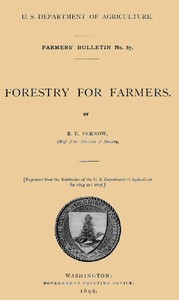
Forestry for Farmers
Written by B. E. (Bernhard Eduard) Fernow
Chaptra reads alongside you — AI insights, chapter breakdowns and reader discussions for every book. Join free
About this book
Reading guide
Themes, characters and key ideas in Forestry for Farmers, written by Chaptra AI.
- about 8 hours
- intermediate
- informative
- educational
- didactic
B. E. Fernow's "Forestry for Farmers" is a pivotal late 19th-century scientific guide designed to empower farmers with essential forestry knowledge. The book meticulously details principles of tree growth, sustainable management of small timber tracts, and the multifaceted benefits forests offer to agricultural lands. Fernow passionately argues for the critical interdependence between robust forestry practices and overall farm productivity and ecological balance. By demystifying complex ecological processes and offering practical applications, the work serves as an urgent call for integrating forestry into mainstream agricultural land management strategies. Its core message advocates for a holistic understanding of land use to ensure long-term sustainability and economic viability for farmers.
“A better understanding of these processes is crucial for both agricultural and ecological sustainability.”
Key themes
- Sustainable Resource Management
- This is the overarching theme, central to Fernow's advocacy. The book argues for a proactive, long-term approach to managing natural resources, specifically timber and woodlots, ensuring their continued productivity and health for future generations rather than short-sighted exploitation. It emphasizes careful planning, cultivation, and harvesting.
- Ecological Interdependence
- Fernow meticulously details how various elements of an ecosystem—trees, soil, water, light, and agricultural crops—are interconnected. He highlights how the health of one component directly impacts the others, making a compelling case for a holistic approach to land management where forestry is integrated with farming.
- Economic Benefits of Forestry
- Beyond ecological arguments, Fernow stresses the tangible economic advantages for farmers who adopt sound forestry practices. He frames forestry not as a separate endeavor but as an integral part of farm economics, contributing to overall profitability through timber sales, fuel wood, and enhanced farm productivity.
Worth discussing
How does Fernow's argument for the 'interdependence between trees and agricultural productivity' resonate with modern ecological farming practices?
Chapter-by-chapter breakdowns, character arcs and the full thematic analysis come with a free account.
Discussions
No one has started one yet
Questions this book opens up
No discussions yet
Be the first to start a discussion about this book!
Sign up to start the discussionReviews
No reviews yet
Be the first to review this book!