
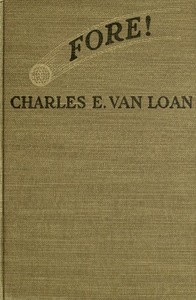
Fore!
Written by Charles E. (Charles Emmett) Van Loan
Chaptra reads alongside you — AI insights, chapter breakdowns and reader discussions for every book. Join free
About this book
Read it with a club
Small groups reading the same books and talking as they go.


News
- 3 members
- 1,813 discussions
- Active Sep 11
Read Fore! alongside people who are reading it too.
Also here: News Bulletin, Just Joking....
Chaptra Prime — paid clubs, every club feature, and unlimited reading support, for $5 a month or $60 once.
See PrimeReading guide
Themes, characters and key ideas in Fore!, written by Chaptra AI.
- about 7 hours
- intermediate
- humorous
- lighthearted
- witty
Charles E. Van Loan's "Fore!" is a delightful early 20th-century humorous novel that plunges into the idiosyncratic world of golf. The story centers on Wally Wallace, a spirited young golfer, whose eagerness to play a swift game constantly puts him at odds with the 'Big Four,' a notoriously slow and pompous foursome of elderly club members. Through their comedic clashes over golf etiquette and club politics, the novel satirizes generational divides and the often-absurd rituals surrounding the sport. It offers a lighthearted yet insightful look into human behavior, camaraderie, and the frustrations and joys found on the golf course.
“The golf course, like life, is full of obstacles; some green, some sand, and some in the form of the Big Four.”
Key themes
- Humor and Satire
- As a humorous novel, the exploration of humor and satire is central. Van Loan uses wit, irony, and situational comedy to entertain while gently critiquing human foibles, particularly those related to pride, stubbornness, and social pretension within the context of golf and club life.
- Generational Conflict
- This theme explores the clash between the younger, more energetic generation (represented by Wally Wallace) and the older, more traditional and perhaps complacent generation (represented by the Big Four). It delves into differing values regarding pace, efficiency, respect for tradition, and the interpretation of rules.
- Social Etiquette and Rules
- The novel uses the specific rules and unwritten etiquette of golf as a microcosm for broader social rules and expectations. It examines how these rules are established, interpreted, and often flouted, leading to comedic and frustrating situations. It explores the tension between formal rules and implied social contracts.
Worth discussing
How does the novel use the rules and etiquette of golf as a metaphor for broader societal norms and conflicts?
Chapter-by-chapter breakdowns, character arcs and the full thematic analysis come with a free account.
Discussions
No one has started one yet
Questions this book opens up
No discussions yet
Be the first to start a discussion about this book!
Sign up to start the discussionReviews
No reviews yet
Be the first to review this book!