
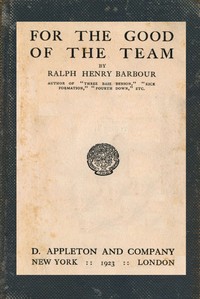
For the good of the team
Written by Ralph Henry Barbour
Chaptra reads alongside you — AI insights, chapter breakdowns and reader discussions for every book. Join free
About this book
Reading guide
Themes, characters and key ideas in For the good of the team, written by Chaptra AI.
- about 8 hours
- intermediate
- Uplifting
- Inspirational
- Challenging
Ralph Henry Barbour's "For the Good of the Team" is an early 20th-century novel centered on high school football at Manning School. The narrative follows Stuart Harven, the youngest captain, and his friend Jack Brewton as they navigate the challenges of a new school year. A central conflict arises with the arrival of Coach Mr. Haynes, whose unconventional methods clash with established traditions, creating tension and testing the team's unity. The story explores themes of leadership, teamwork, and the importance of adapting to change, as the team strives to defend its reputation against rivals while learning to coalesce under new guidance. Ultimately, it champions perseverance and the spirit of collective effort in the face of adversity.
“"For the good of the team, Harven, we must sometimes set aside what we know for what we might learn."”
Key themes
- Teamwork and Unity
- This is the foundational theme, explored through the football team's journey. The novel emphasizes that individual talent is insufficient without collective effort and a unified spirit. The initial tension caused by the new coach's methods highlights the fragility of unity and the work required to forge a cohesive unit, ultimately demonstrating that true success comes from working together towards a common goal.
- Leadership and Responsibility
- The theme of leadership is central, primarily explored through Stuart Harven's character arc. As the youngest captain, Stuart faces the immense responsibility of guiding his team through significant change and adversity. The novel examines the qualities of effective leadership, including diplomacy, decisiveness, the ability to inspire, and the courage to make difficult decisions for the collective good, even when unpopular.
- Tradition vs. Innovation
- This theme forms the primary conflict driver. The arrival of Coach Haynes with his 'unconventional methods' directly challenges the long-standing traditions of the Manning School football team. The novel explores the inherent resistance to change, the value of established practices, and the necessity of adapting and innovating to achieve new levels of success. It suggests that while tradition provides a foundation, progress often requires a willingness to break from the past.
Worth discussing
How does Stuart Harven's role as the 'youngest captain' impact his leadership style and the challenges he faces?
Chapter-by-chapter breakdowns, character arcs and the full thematic analysis come with a free account.
Discussions
No one has started one yet
Questions this book opens up
No discussions yet
Be the first to start a discussion about this book!
Sign up to start the discussionReviews
No reviews yet
Be the first to review this book!