
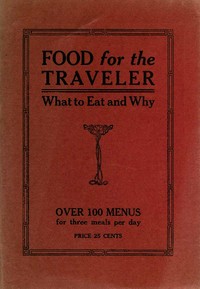
Food for the traveler : $b what to eat and why
Written by Dora C. C. L. (Dora Cathrine Cristine Liebel) Roper
Chaptra reads alongside you — AI insights, chapter breakdowns and reader discussions for every book. Join free
About this book
Reading guide
Themes, characters and key ideas in Food for the traveler : $b what to eat and why, written by Chaptra AI.
- about 8 hours
- intermediate
- informative
- instructive
- practical
Dora C. C. L. Roper's "Food for the Traveler: What to Eat and Why" is an early 20th-century dietary guide designed to equip travelers and the general public with knowledge for making informed nutritional choices. The book meticulously outlines fundamental nutritional principles, advocates for proper food combinations, and provides over 100 practical menus emphasizing health and economic efficiency. It delves into the intricate relationship between diet and overall well-being, offering tailored advice based on individual factors like age, occupation, and lifestyle. Roper also guides readers through vegetarian transitions and stresses the importance of understanding food's nutritional value, ultimately aiming to foster healthier eating habits and prevent common dietary pitfalls.
“To eat wisely is to live well, especially when the demands of travel test the body's resilience.”
Key themes
- Diet and Health
- This is the central theme, exploring the fundamental and direct relationship between what one eats and one's overall physical and mental well-being. Roper meticulously details how specific food choices impact vitality, disease prevention, and daily functioning, positing diet as the cornerstone of a healthy life.
- Informed Choice and Nutritional Literacy
- Roper empowers her readers by not just telling them what to eat, but 'why'. This theme underscores the importance of understanding nutritional principles and the value of foods, enabling individuals to make conscious, educated decisions about their diet rather than blindly following rules.
- Economy and Practicality in Diet
- Beyond health, the book integrates the practical considerations of cost and convenience into dietary planning. It suggests that healthy eating need not be expensive or complicated, especially for travelers or those with limited resources, making good nutrition accessible.
Worth discussing
How do Roper's nutritional principles compare with contemporary dietary advice? What has changed, and what remains consistent?
Chapter-by-chapter breakdowns, character arcs and the full thematic analysis come with a free account.
Discussions
No one has started one yet
Questions this book opens up
No discussions yet
Be the first to start a discussion about this book!
Sign up to start the discussionReviews
No reviews yet
Be the first to review this book!