
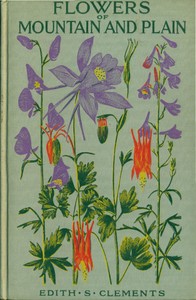
Flowers of mountain and plain
Written by Edith S. (Edith Schwartz) Clements
Chaptra reads alongside you — AI insights, chapter breakdowns and reader discussions for every book. Join free
About this book
Read it with a club
Small groups reading the same books and talking as they go.


News
- 1 member
- 1,813 discussions
- Active 1d ago
Read Flowers of mountain and plain alongside people who are reading it too.
Also here: News Bulletin, Just Joking....
Chaptra Prime — paid clubs, every club feature, and unlimited reading support, for $5 a month or $60 once.
See PrimeReading guide
Themes, characters and key ideas in Flowers of mountain and plain, written by Chaptra AI.
- about 8 hours
- intermediate
- Informative
- Educational
- Appreciative
Edith S. Clements' "Flowers of Mountain and Plain" is an essential early 20th-century field guide dedicated to the diverse wildflowers of the Western United States' mountainous and plains regions. This scientific publication meticulously describes and illustrates 175 species, aiming to empower travelers and flower enthusiasts with the knowledge to identify, appreciate, and conserve these natural beauties. Through detailed botanical descriptions, insights into habitat, blooming seasons, and pollination, the book serves as both a practical identification tool and a compelling call to environmental stewardship. It blends scientific rigor with accessible language, making the wonders of regional flora approachable for a broad audience.
“"Our aim is to bring the splendor of the Western flora within reach of every traveler and admirer, transforming mere observation into profound appreciation."”
Key themes
- Appreciation of Nature's Beauty
- This theme is central to the book's entire premise. Clements aims not just to identify, but to cultivate a deeper aesthetic and emotional connection to wildflowers. The detailed descriptions and the inclusion of 'vivid illustrations' serve to highlight the intricate beauty, varied forms, and vibrant colors of the flora, encouraging readers to marvel at the natural world.
- Scientific Observation and Classification
- As a scientific field guide, the book's core function is to teach systematic observation and classification. It provides detailed methodologies for identifying plants based on their morphological features, habitat, and seasonal cycles. This theme underscores the scientific rigor behind botany and empowers readers with practical skills for engaging with the natural world in a structured, informed manner.
- Conservation and Environmental Stewardship
- Implicitly and sometimes explicitly, Clements' work advocates for the protection of natural environments. By fostering appreciation and understanding of wildflowers, the book encourages readers to become stewards of these delicate ecosystems. The act of learning about and valuing these plants naturally leads to a desire to preserve them, making the guide a gentle call to early environmentalism.
Worth discussing
How do field guides like 'Flowers of Mountain and Plain' contribute to public engagement with science and nature?
Chapter-by-chapter breakdowns, character arcs and the full thematic analysis come with a free account.
Discussions
No one has started one yet
Questions this book opens up
No discussions yet
Be the first to start a discussion about this book!
Sign up to start the discussionReviews
No reviews yet
Be the first to review this book!