
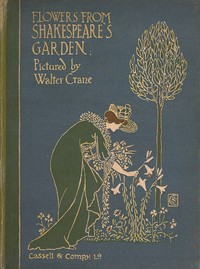
Flowers from Shakespeare's Garden: A Posy from the Plays
Written by William Shakespeare
Chaptra reads alongside you — AI insights, chapter breakdowns and reader discussions for every book. Join free
About this book
Reading guide
Themes, characters and key ideas in Flowers from Shakespeare's Garden: A Posy from the Plays, written by Chaptra AI.
- about 8 hours
- advanced
- poetic
- evocative
- reflective
Flowers from Shakespeare's Garden: A Posy from the Plays is an early 20th-century anthology meticulously curated to showcase the pervasive and profound floral imagery within William Shakespeare's dramatic works. This beautifully illustrated collection, enhanced by the artistry of Walter Crane, transcends a simple compilation by highlighting the symbolic depth and emotional resonance that flowers lend to the Bard's narratives. It serves as a unique bridge between literature and the natural world, inviting readers to explore Shakespeare's genius through the lens of botanical metaphor. The book extracts poetic verses where specific flowers, from humble violets to regal roses, are presented with their contextual and symbolic meanings. Ultimately, it celebrates Shakespeare's unparalleled ability to weave nature's beauty and fragility into the fabric of human experience, love, and remembrance.
“There's rosemary, that's for remembrance; pray, love, remember: and there is pansies, that's for thoughts.”
Key themes
- Nature's Symbolism and Human Emotion
- This theme explores how Shakespeare uses flowers as potent symbols and metaphors to represent a vast spectrum of human emotions, virtues, vices, and states of being. Each bloom carries specific connotations, allowing Shakespeare to enrich his characters' inner lives and dramatic situations without explicit exposition.
- Beauty and Fragility
- This theme highlights the ephemeral nature of beauty and life, often mirrored by the short lifespan of a flower. Shakespeare frequently uses the blossoming and fading of flowers to comment on the transient nature of youth, love, and human existence itself, juxtaposing their delicate beauty with inevitable decay or loss.
- Love, Loss, and Remembrance
- Flowers frequently serve as tokens of affection, remembrance, or sorrow in Shakespeare's plays. They mark significant emotional events, from declarations of love to expressions of grief, becoming tangible representations of intangible human bonds and memories.
Worth discussing
How do the specific choices of flowers in Shakespeare's plays deepen our understanding of character and plot?
Chapter-by-chapter breakdowns, character arcs and the full thematic analysis come with a free account.
Discussions
No one has started one yet
Questions this book opens up
No discussions yet
Be the first to start a discussion about this book!
Sign up to start the discussionReviews
No reviews yet
Be the first to review this book!