
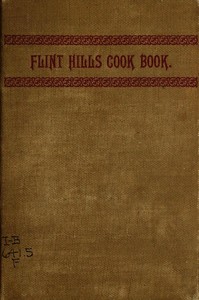
Flint Hills Cook Book
Written by Iowa) Christ Church Episcopal (Burlington
Chaptra reads alongside you — AI insights, chapter breakdowns and reader discussions for every book. Join free
About this book
Read it with a club
Small groups reading the same books and talking as they go.


News
- 1 member
- 1,813 discussions
- Active 2d ago
Read Flint Hills Cook Book alongside people who are reading it too.
Also here: News Bulletin, Just Joking....
Chaptra Prime — paid clubs, every club feature, and unlimited reading support, for $5 a month or $60 once.
See PrimeReading guide
Themes, characters and key ideas in Flint Hills Cook Book, written by Chaptra AI.
- about 4 hours
- beginner
- Nostalgic
- Practical
- Communal
The "Flint Hills Cook Book," a late 19th-century compilation by the women of Christ Church Parish in Burlington, Iowa, serves as a significant cultural artifact, documenting the domestic culinary practices of its era. This collection of recipes, ranging from staple breads and soups to elaborate desserts and preserves, provides an intimate glimpse into the daily lives and communal traditions of women in the American Midwest. The cookbook's preface proudly frames cooking as a foundational, female-led art form rooted in necessity and tradition, underscoring the compilers' dedication to preserving local culinary heritage. Organized for practical use, its diverse content reflects the resourcefulness and skill required for homemaking, making it more than just a recipe guide but a window into a bygone domestic world.
“cooking as a longstanding tradition rooted in the necessity of satisfying hunger”
Key themes
- Domesticity and Homemaking
- The cookbook unequivocally centers on the art and necessity of domestic life. It presents a comprehensive guide to running a 19th-century household's kitchen, from daily bread-making to seasonal preservation. This theme highlights the significant labor and skill involved in creating a nurturing home environment, primarily through the preparation of food.
- Community and Shared Knowledge
- The collaborative nature of the cookbook, 'compiled by the women of Christ Church Parish,' underscores the theme of community. It signifies a collective effort to pool individual expertise for the benefit of all, fostering a sense of shared identity and mutual support through the exchange of culinary traditions.
- Culinary Heritage and Preservation
- A core purpose of the "Flint Hills Cook Book" is to document and preserve the culinary heritage of its community for future generations. It acts as a time capsule, capturing specific recipes, ingredients, and cooking methods that might otherwise be lost, thereby ensuring the continuity of traditional foodways.
Worth discussing
How does the 'Flint Hills Cook Book' reflect the role of women in late 19th-century society, particularly concerning domestic labor and community contribution?
Chapter-by-chapter breakdowns, character arcs and the full thematic analysis come with a free account.
Discussions
No one has started one yet
Questions this book opens up
No discussions yet
Be the first to start a discussion about this book!
Sign up to start the discussionReviews
No reviews yet
Be the first to review this book!