
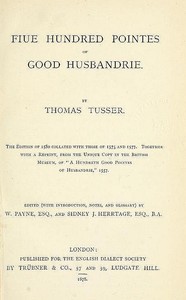
Fiue Hundred Pointes of Good Husbandrie
Written by Thomas Tusser
Chaptra reads alongside you — AI insights, chapter breakdowns and reader discussions for every book. Join free
About this book
Reading guide
Themes, characters and key ideas in Fiue Hundred Pointes of Good Husbandrie, written by Chaptra AI.
- about 15 hours
- advanced
- instructive
- practical
- didactic
Thomas Tusser's "Fiue Hundred Pointes of Good Husbandrie" is a comprehensive late 16th-century guide to agricultural and household management, presented primarily in rhyming verse. It meticulously details the seasonal tasks for farmers and the daily duties for housewives, emphasizing efficiency, thrift, and moral rectitude. Beyond practical instruction, the work reflects the agrarian economy and social customs of Tudor England, advocating for diligent work and virtuous living as foundations for prosperity. Tusser's unique blend of practical advice with ethical guidance aims to make the complex world of rural management accessible and memorable for its intended audience, ensuring the well-being of both land and family.
“Who looketh not well to his farm, must look to his purse.”
Key themes
- Good Husbandry and Agriculture
- This is the central, overarching theme of the book, encompassing all aspects of farming, land management, and animal care. Tusser provides detailed, seasonal instructions for every aspect of agricultural life, emphasizing efficiency, productivity, and the sustainable use of resources. It's about the practical knowledge required to make a farm thrive.
- Thrift and Frugality
- Tusser places immense importance on saving, avoiding waste, and prudent management of resources. This theme is explored through constant reminders to mend rather than replace, to utilize every part of an animal or crop, and to save for lean times. It's presented not just as good economic practice but as a moral imperative.
- Gender Roles and Domesticity
- The book explicitly defines and delineates the roles of the husbandman and the housewife, outlining their distinct yet complementary duties. The husband's domain is primarily the fields and external farm work, while the wife's is the home, garden, and internal household management. This theme provides a clear picture of gender expectations and the division of labor in 16th-century rural society.
Worth discussing
How does Tusser's use of verse contribute to the book's effectiveness as an instructional manual?
Chapter-by-chapter breakdowns, character arcs and the full thematic analysis come with a free account.
Discussions
No one has started one yet
Questions this book opens up
No discussions yet
Be the first to start a discussion about this book!
Sign up to start the discussionReviews
No reviews yet
Be the first to review this book!