
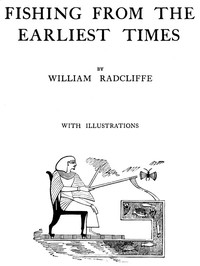
Fishing from the Earliest Times
Written by William Radcliffe
Chaptra reads alongside you — AI insights, chapter breakdowns and reader discussions for every book. Join free
About this book
Reading guide
Themes, characters and key ideas in Fishing from the Earliest Times, written by Chaptra AI.
- about 8 hours
- advanced
- Informative
- Historical
- Academic
William Radcliffe's 'Fishing from the Earliest Times' is a seminal early 20th-century historical treatise that meticulously chronicles the evolution of fishing practices and implements across ancient civilizations. The work delves into the development of techniques, from prehistoric origins to the classical era, examining their significance in cultures such as the Greeks, Romans, and Egyptians. Radcliffe challenges conventional chronologies of tools like the spear, net, and rod, positing fishing as a highly specialized craft distinct from hunting. It offers a comprehensive exploration of humanity's enduring relationship with aquatic resources and the sophisticated tools devised over millennia.
“The question of the earliest implements of fishing, be it spear, net, or rod, is fraught with a complexity that belies simple chronological assertion.”
Key themes
- Human Ingenuity and Technological Evolution
- This theme explores humanity's continuous capacity for innovation, adapting and developing increasingly sophisticated tools and techniques for fishing across millennia. Radcliffe meticulously details the progression from basic implements to more complex systems, highlighting the problem-solving skills of ancient peoples.
- Cultural and Economic Significance of Fishing
- Radcliffe emphasizes that fishing was not merely a subsistence activity but a deeply integrated aspect of ancient cultures, influencing economies, diets, art, and possibly even social structures. He differentiates its role from hunting, positioning it as a specialized, often commercial, endeavor.
- The Challenge of Historical Reconstruction
- This theme implicitly runs through Radcliffe's work as he navigates the difficulties of piecing together a comprehensive history from fragmented evidence. He questions established chronologies and critically evaluates sources, showcasing the scholarly process of inferring the past from limited artifacts and texts.
Worth discussing
How does Radcliffe's argument for fishing as a 'specialized craft' from earliest times challenge or confirm your understanding of prehistoric human activities?
Chapter-by-chapter breakdowns, character arcs and the full thematic analysis come with a free account.
Discussions
No one has started one yet
Questions this book opens up
No discussions yet
Be the first to start a discussion about this book!
Sign up to start the discussionReviews
No reviews yet
Be the first to review this book!