
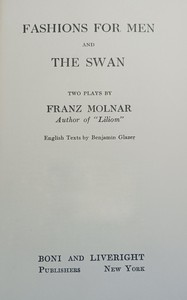
Fashions for men, and The swan : $b Two plays by Franz Molnar
Written by Ferenc Molnár
Chaptra reads alongside you — AI insights, chapter breakdowns and reader discussions for every book. Join free
About this book
Reading guide
Themes, characters and key ideas in Fashions for men, and The swan : $b Two plays by Franz Molnar, written by Chaptra AI.
- about 8 hours
- intermediate
- humorous
- poignant
- satirical
Ferenc Molnár's "Fashions for Men, and The Swan" presents a dual exploration of human nature, social constraints, and the pursuit of happiness in early 20th-century Central Europe. "Fashions for Men" delves into the everyday struggles and desires within a modest clothing shop, using humor and poignancy to examine marital loyalty, class dynamics, and personal ambition through the lens of Peter Juhasz, his wife Adele, and their interactions. "The Swan," a romantic comedy set in a European principality, contrasts this with the world of aristocracy, exploring themes of duty versus desire, societal expectations, and the performative nature of royal life through Princess Alexandra's forbidden affection for her tutor. Together, the plays showcase Molnár's sharp wit, keen observation of social intricacies, and his ability to craft engaging narratives that reveal the universal complexities of the human heart.
“Direct quotes not available without full text; themes are explored through witty dialogue and social commentary, often highlighting the contrast between appearance and reality, and the human struggle between desire and duty.”
Key themes
- Duty vs. Desire
- This is a central conflict in both plays. Characters are torn between what they want (love, freedom, personal happiness) and what they are expected to do (marital loyalty, royal duty, societal norms). Molnár explores the often painful compromises that arise from this conflict.
- Social Class and Aspiration
- Both plays, though in different ways, explore the rigidities and aspirations tied to social class. 'Fashions for Men' highlights the struggles of the middle class, the precariousness of their economic status, and how social climbing (or falling) impacts personal relationships. 'The Swan' critiques the aristocracy, revealing the gilded cage of royalty where duty often overrides personal desire, and the artificiality of a life dictated by status.
- Love, Loyalty, and Betrayal
- These interconnected themes are at the heart of the personal relationships explored in both plays. 'Fashions for Men' directly addresses marital loyalty and the pain of betrayal, while 'The Swan' explores the complexities of forbidden love and loyalty to oneself versus one's station.
Worth discussing
How do both plays explore the tension between individual desire and societal expectations, and are the resolutions satisfying?
Chapter-by-chapter breakdowns, character arcs and the full thematic analysis come with a free account.
Discussions
No one has started one yet
Questions this book opens up
No discussions yet
Be the first to start a discussion about this book!
Sign up to start the discussionReviews
No reviews yet
Be the first to review this book!