
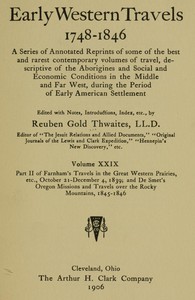
Farnham's Travels in the Great Western Prairies, etc., part 2, October 21-December 4, 1839: and De Smet's Oregon Missions and Travels over the Rocky Mountains, 1845-1846
Written by Thomas Jefferson Farnham,Pierre-Jean de Smet
Chaptra reads alongside you — AI insights, chapter breakdowns and reader discussions for every book. Join free
About this book
Reading guide
Themes, characters and key ideas in Farnham's Travels in the Great Western Prairies, etc., part 2, October 21-December 4, 1839: and De Smet's Oregon Missions and Travels over the Rocky Mountains, 1845-1846, written by Chaptra AI.
- about 12 hours
- advanced
- informative
- historical
- observational
This volume chronicles Thomas Jefferson Farnham's journey through the Great Western Prairies and Oregon Territory in late 1839, offering a firsthand account of early American westward expansion. Starting from Vancouver, Farnham details the natural geography of Wappatoo Island and the Willamette River, alongside the emerging socio-economic conditions of settlers and missionaries in the wilderness. His narrative provides crucial insights into interactions with indigenous populations, attempts at 'civilization,' and the challenges of frontier life during a transformative period in American history. The volume also includes Pierre-Jean de Smet's later accounts of Oregon missions and travels over the Rocky Mountains from 1845-1846, providing a broader perspective on missionary efforts and exploration in the region.
“"The Willamette, a stream of much beauty and prospective importance, wound its way through plains of exhaustless fertility."”
Key themes
- Westward Expansion and Manifest Destiny
- This theme is central to the entire narrative, exploring the push of American settlers into the Western territories. Farnham's journey embodies the spirit of exploration and the belief in America's destiny to expand across the continent, detailing the practical realities, challenges, and aspirations associated with claiming new lands.
- Wilderness vs. Civilization
- The narrative constantly contrasts the untamed natural environment with the attempts of humans to establish order, agriculture, and communities. This theme explores the tension between the raw beauty and danger of the wilderness and the human desire to tame, cultivate, and build a 'civilized' society.
- Cultural Exchange and Clash
- The book explores the complex interactions between Euro-American settlers, missionaries, and the indigenous populations of the Oregon Territory. It highlights the often-uneven exchanges of goods, ideas, and customs, and the inherent conflicts arising from differing worldviews, land claims, and attempts at cultural assimilation.
Worth discussing
How does Farnham's account reflect or challenge the concept of Manifest Destiny prevalent in the 19th century?
Chapter-by-chapter breakdowns, character arcs and the full thematic analysis come with a free account.
Discussions
No one has started one yet
Questions this book opens up
No discussions yet
Be the first to start a discussion about this book!
Sign up to start the discussionReviews
No reviews yet
Be the first to review this book!