
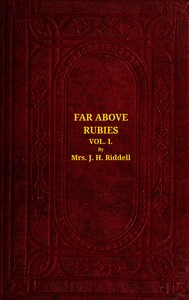
Far above rubies (Vol. 1 of 3) : $b A novel
Written by J. H. Riddell
Chaptra reads alongside you — AI insights, chapter breakdowns and reader discussions for every book. Join free
About this book
Reading guide
Themes, characters and key ideas in Far above rubies (Vol. 1 of 3) : $b A novel, written by Chaptra AI.
- about 8 hours
- intermediate
- melancholy
- reflective
- pastoral
Mrs. J. H. Riddell's "Far Above Rubies" (Vol. 1 of 3) is a late 19th-century novel set in the picturesque rural English landscape of Berrie Down Hollow. The story centers on Arthur Dudley, the squire, who, despite his advantages, grapples with profound dissatisfaction and the weighty responsibilities of his estate and family, including his younger siblings. His devoted wife, Heather, serves as a beacon of inner contentment amidst his struggles, highlighting a contrast between external burdens and internal peace. The narrative beautifully captures the enchanting countryside, using vivid imagery to evoke a sense of nostalgia, while simultaneously delving into the complexities of human relationships, love, and the often-disappointing realities of life.
“"The beauty of Berrie Down Hollow seemed only to deepen the shadows within Arthur Dudley's soul, a stark contrast between nature's bounty and man's discontent."”
Key themes
- Discontent vs. Contentment
- This theme explores the profound psychological state of dissatisfaction, particularly through Arthur Dudley, who, despite his material advantages, feels deeply unfulfilled. It contrasts his inner turmoil with Heather's quiet contentment, questioning the sources of true happiness and the nature of human desire. The theme delves into whether contentment is an internal state or dependent on external circumstances.
- The Burden of Property and Responsibility
- The novel examines the often-overlooked psychological and practical weight that comes with inherited wealth, land, and social position. Arthur Dudley's struggles highlight how property, intended to be a blessing, can become a source of profound resentment and obligation, limiting personal freedom and shaping one's identity against their will. This theme also touches upon the responsibilities towards family members, particularly younger siblings.
- Domesticity and Marital Dynamics
- The novel intricately portrays the complexities within a late 19th-century marriage, particularly the contrast between Arthur's inner turmoil and Heather's steadfast devotion. It explores the roles expected of husbands and wives during this period, the nature of selfless love, and how individual psychological states can deeply impact the marital bond. Heather's character, in particular, embodies the ideal of the supportive, nurturing wife, while Arthur's perspective reveals the challenges of fulfilling the husband's role when burdened by personal discontent.
Worth discussing
How does the novel portray the relationship between material wealth and personal happiness through Arthur Dudley's character?
Chapter-by-chapter breakdowns, character arcs and the full thematic analysis come with a free account.
Discussions
No one has started one yet
Questions this book opens up
No discussions yet
Be the first to start a discussion about this book!
Sign up to start the discussionReviews
No reviews yet
Be the first to review this book!