
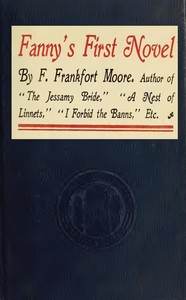
Fanny's First Novel
Written by Frank Frankfort Moore
Chaptra reads alongside you — AI insights, chapter breakdowns and reader discussions for every book. Join free
About this book
Reading guide
Themes, characters and key ideas in Fanny's First Novel, written by Chaptra AI.
- about 7 hours
- intermediate
- humorous
- lighthearted
- romantic
Frank Frankfort Moore's "Fanny's First Novel" is a charming and witty Edwardian comedy of manners that satirizes the literary world and societal expectations placed upon young women. The story follows Fanny, a spirited young woman who embarks on writing her first novel, only to find the fictional events and characters she creates begin to eerily intersect with her own life and the lives of her acquaintances. As her novel gains attention, it sparks a series of comedic misunderstandings, social embarrassments, and romantic complications, forcing Fanny to navigate the delicate line between artistic expression and social propriety. The novel cleverly explores themes of authorship, the blurring of fiction and reality, and the challenges faced by female writers in a society often skeptical of their creative ambitions.
“"A novelist, my dear, is merely a social seismograph, recording the tremors of human folly and affection."”
Key themes
- The Blurring of Fiction and Reality
- This is the central thematic engine of the novel. Moore expertly plays with the idea that readers often project real-world individuals and events onto fictional narratives, and how an author's creations can, in turn, influence the perception and even actions of real people. It highlights the subjective nature of truth and interpretation.
- The Nature of Authorship and Creativity
- The novel deeply explores what it means to be an author, the inspiration behind creative works, and the process of transforming observation into narrative. It examines the inherent challenges and responsibilities of storytelling, particularly when the 'real' world and the 'fictional' world begin to merge in the public's perception.
- Social Satire and Edwardian Manners
- The novel offers a gentle but insightful critique of Edwardian society, particularly its class structures, social expectations, and the pervasive nature of gossip. It satirizes the superficiality of certain social interactions and the often-ridiculous importance placed on reputation and appearances.
Worth discussing
How does Fanny's experience as a female author reflect societal attitudes towards women's intellectual and creative pursuits in the Edwardian era?
Chapter-by-chapter breakdowns, character arcs and the full thematic analysis come with a free account.
Discussions
No one has started one yet
Questions this book opens up
No discussions yet
Be the first to start a discussion about this book!
Sign up to start the discussionReviews
No reviews yet
Be the first to review this book!