
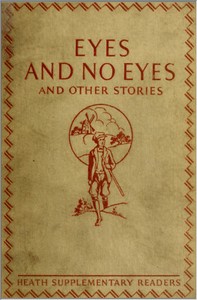
Eyes and No Eyes, and Other Stories
Written by Mrs. (Jane Haldimand) Marcet,Mrs. (Anna Letitia) Barbauld,John Aikin,Jane Taylor
Chaptra reads alongside you — AI insights, chapter breakdowns and reader discussions for every book. Join free
About this book
Read it with a club
Small groups reading the same books and talking as they go.


News
- 4 members
- 1,813 discussions
- Active Sep 11
Read Eyes and No Eyes, and Other Stories alongside people who are reading it too.
Also here: News Bulletin, Just Joking....
Chaptra Prime — paid clubs, every club feature, and unlimited reading support, for $5 a month or $60 once.
See PrimeReading guide
Themes, characters and key ideas in Eyes and No Eyes, and Other Stories, written by Chaptra AI.
- about 8 hours
- beginner
- educational
- curious
- observational
''Eyes and No Eyes, and Other Stories'' is a late 19th-century collection of children's tales by Mrs. Marcet, Mrs. Barbauld, John Aikin, and Jane Taylor, compiled by M.V. O'Shea, designed to cultivate observation and curiosity in young readers. The titular story contrasts William, an attentive boy who discovers natural wonders during a walk, with Robert, his indifferent companion who misses these experiences. Through engaging narratives rather than direct instruction, the book aims to foster an appreciation for the natural world and encourage active learning. Other stories, like 'The Three Giants,' employ allegory to explain fundamental concepts, such as the forces of water, wind, and steam, and their societal roles. Ultimately, the collection serves as a charming and didactic guide, inspiring children to actively explore and understand their surroundings.
“The world is full of wonders, if only one chooses to see them.”
Key themes
- Observation and Curiosity
- This is the central theme of the collection, particularly highlighted in 'Eyes and No Eyes.' It explores the idea that actively engaging with one's surroundings through keen observation and an inquisitive mind leads to a richer understanding and appreciation of the world. The book champions the development of a curious spirit as essential for learning and personal growth.
- Appreciation for the Natural World
- The book strongly advocates for an appreciation of nature's beauty and complexity. It encourages children to develop a connection with their environment, understanding the intricate web of life and the natural processes that shape our world, fostering a sense of wonder and respect for ecology.
- The Value of Education and Active Learning
- Beyond just observation, the book implicitly promotes education as an active process. It suggests that true learning comes not from passive reception but from active inquiry, questioning, and engaging with information. The stories are designed to be entertaining conduits for knowledge, making learning an enjoyable pursuit.
Worth discussing
How does the story 'Eyes and No Eyes' illustrate the difference between seeing and observing? Can you think of examples from your own life?
Chapter-by-chapter breakdowns, character arcs and the full thematic analysis come with a free account.
Discussions
No one has started one yet
Questions this book opens up
No discussions yet
Be the first to start a discussion about this book!
Sign up to start the discussionReviews
No reviews yet
Be the first to review this book!