
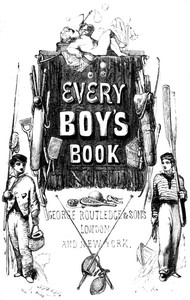
Every Boy's Book: A Complete Encyclopædia of Sports and Amusements
Written by Unknown author
Chaptra reads alongside you — AI insights, chapter breakdowns and reader discussions for every book. Join free
About this book
Reading guide
Themes, characters and key ideas in Every Boy's Book: A Complete Encyclopædia of Sports and Amusements, written by Chaptra AI.
- about 12 hours
- intermediate
- Instructional
- Nostalgic
- Earnest
"Every Boy's Book: A Complete Encyclopædia of Sports and Amusements" is a seminal Victorian-era compendium designed to educate, entertain, and shape the character of young boys. Published anonymously, it offers a vast array of instructions and advice on sports, games, hobbies, and practical skills, reflecting the societal ideals of its time. The book served as a guide for physical activity, intellectual development, and moral instruction, aiming to cultivate a well-rounded and virtuous young man. It provides a fascinating historical window into 19th-century childhood, leisure, and pedagogy, emphasizing self-improvement and productive engagement.
“Every boy should be a master of some useful art or accomplishment, and the more varied his knowledge, the better he will be fitted for the battle of life.”
Key themes
- Victorian Masculinity and Character Building
- The book is a quintessential artifact of Victorian efforts to shape boys into responsible, capable, and moral men. It rigorously promotes physical strength, courage, self-reliance, discipline, and practical competence through a wide array of sports and skills, while simultaneously instilling virtues such as honesty, fair play, and perseverance. It effectively defines the ideal 'good boy' of the era, emphasizing active engagement, continuous learning, and productive, ethical leisure to prepare them for their adult roles in society.
- The Value of Wholesome Recreation and Productive Leisure
- In an era that often viewed idleness as a moral failing, the book vigorously champions active, educational, and morally upright forms of leisure. It presents a structured alternative to unproductive pursuits, suggesting that play and hobbies are not merely entertainment but vital components for physical health, mental development, and moral growth. The book implicitly argues that well-chosen leisure activities are integral to forming a virtuous and capable individual.
- Self-Improvement and Practical Knowledge
- A foundational principle of the book is the idea that boys should constantly strive for self-improvement by acquiring a broad spectrum of practical skills and knowledge. This theme resonates with the Victorian emphasis on self-help and the belief that education, combined with practical competence, was essential for personal advancement and success in life. The book acts as a manual for lifelong learning and practical mastery.
Worth discussing
How does 'Every Boy's Book' reflect the Victorian ideals of masculinity, character development, and social expectations for young men?
Chapter-by-chapter breakdowns, character arcs and the full thematic analysis come with a free account.
Discussions
No one has started one yet
Questions this book opens up
No discussions yet
Be the first to start a discussion about this book!
Sign up to start the discussionReviews
No reviews yet
Be the first to review this book!