
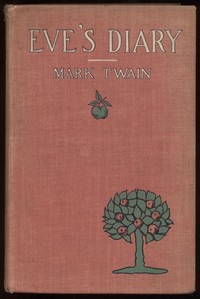
Eve's Diary, Part 3
Written by Mark Twain
Chaptra reads alongside you — AI insights, chapter breakdowns and reader discussions for every book. Join free
About this book
Reading guide
Themes, characters and key ideas in Eve's Diary, Part 3, written by Chaptra AI.
- about 8 hours
- intermediate
- humorous
- poignant
- reflective
Mark Twain's "Eve's Diary, Part 3" offers a humorous and poignant look at the dawn of human relationships, narrated exclusively through Adam's cynical yet ultimately loving perspective. This satirical piece chronicles Adam's observations of Eve, highlighting their starkly contrasting personalities: her boundless enthusiasm for the natural world against his pragmatic detachment. Through a series of diary entries, Adam recounts their initial attempts at coexistence with each other and the animal kingdom, including a memorable encounter with a brontosaurus, all while grappling with his evolving feelings. The narrative culminates in a profound realization of deep affection, transforming his initial frustrations into an enduring testament to love. Twain masterfully blends humor with a tender exploration of companionship, gender dynamics, and the complexities of the human heart.
“She has a passion for colors. She calls them by names that I have never heard before.”
Key themes
- Love and Companionship
- This is the central theme, exploring the evolution of love from initial irritation and bewilderment to profound affection and dependency. Twain illustrates how shared experiences, despite contrasting personalities, can forge an unbreakable bond, highlighting the beauty of finding paradise in another person.
- Gender Roles and Perception
- Twain uses Adam's perspective to satirize and explore traditional male and female dynamics. Eve embodies archetypal 'feminine' traits (emotional, curious, nurturing), while Adam represents 'masculine' traits (logical, pragmatic, solitary). The humor arises from their clashes, but the underlying message critiques rigid gender expectations by showing how these differences ultimately complement each other.
- Innocence vs. Experience
- Eve represents pure innocence and wonder, approaching the world with unbridled joy and curiosity. Adam, while also 'new' to the world, possesses a more jaded or pragmatic 'experience' (even if nascent). The dynamic explores how these two states of being interact and influence each other, suggesting that true wisdom might lie in blending both.
Worth discussing
How does Twain use Adam's cynical perspective to create humor and profound insight simultaneously?
Chapter-by-chapter breakdowns, character arcs and the full thematic analysis come with a free account.
Discussions
No one has started one yet
Questions this book opens up
No discussions yet
Be the first to start a discussion about this book!
Sign up to start the discussionReviews
No reviews yet
Be the first to review this book!